
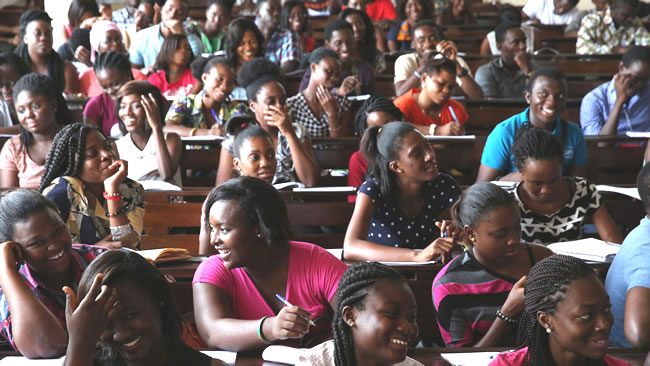
With the tertiary education in Nigeria facing enormous challenges ranging from poor funding, dearth of research and poor welfare for academic and non-academic staff, Nigerians interested in developing themselves educationally have resorted to travelling abroad with a view to attaining that seemingly elusive quality education.
This has led to mass emigration of Nigerians, seeking for visa to the United Kingdom and the United States and other foreign countries for their undergraduate and postgraduate programmes, translating into huge foreign exchange leaving the shores of this country to other countries for the payment of school fees.
Reports say that in the first nine months of the year just ended, 2022, the Central Bank of Nigeria paid over $680m for foreign education.
The data which covered the 2021/2022 academic session estimated that a sum of £680,620,000 were reportedly paid as school fees with a total of £54.3m paid in taxes by working spouses of the students.
Nigerian students and their dependents in the United Kingdom were reported to have contributed an estimated £1.9 billion to the economy of the UK, according to an analysis by SBM intelligence.
As one of the choicest decision by Nigerian students wishing to study abroad, recent data released by the home office of the UK revealed that the number of study visas released to Nigerians increased by 222.8 per cent, with 65,929 issued as of June 2022 as against 20,427 in the same period in 2021.
Foreign universities major source of income come from foreign students from other parts of the world who pay far more for school fees than the local students.
Therefore, Nigerians with their insatiable appetite for obtaining foreign degrees coupled with the difficult conditions in the country which has given rise to the JAPA Syndrome; known as a situation where people flee the country in search of a greener pastures, help to swell the purses of these foreign schools.
Despite this, according to The Daily Mail, Braverman is currently seeking to cut down the amount of time foreign students can stay in the UK after graduation. This is due to the fact that foreign students mostly Nigerians who travel to the UK to study most times end up in the Uk and do not want to come back to Nigeria. Many others still, have been known to travel to the UK under the pretext of going to school, but on getting to the Uk they jettison that plan.
According to reports by the Punch, currently, immigrants who travel to the UK for studies can stay two years after graduation. But with recent development the UK is planning on reducing it to six months owing to the influx of foreigners into the UK.
Consequently, Nigerians and other immigrant students in the United Kingdom currently face a high-risk of deportation after completion of their studies
But the Department for Education is said to be resisting Braverman’s plan to cut that to just six months, after which they have to have a skilled job that makes them eligible for a work visa or leave the UK.
It is not clear what will be the fate of Nigerians in the UK especially many of whom have risked and invested so much to make that trip abroad for a better tomorrow. Time however will tell.
But for now, according to a parent, Mr. Paul Owolabi, who had to sell his house to send his son abroad, they can only hope for the best.
“Our prayer is that Nigeria gets better so our children can gladly come back home after their education as is done years back when the country was very prosperous,” Owolabi said.