
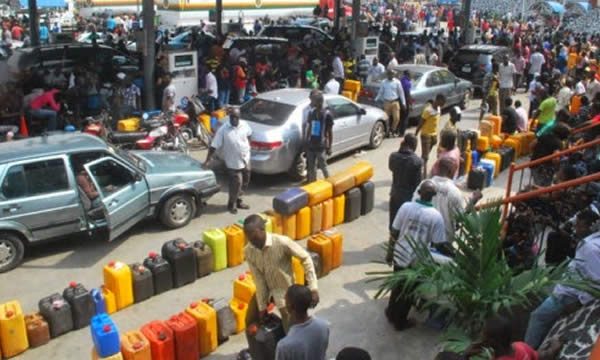
With the scrapping of the petroleum subsidy, Nigerians face harsher times as long queues at the filling stations across the country welcome the advent of the Tinubu’s administration.
Over the years, previous governments have always subsidized fuel for the people knowing how important the commodity is to the basic existence of the people. What they did was to gradually remove subsidy, even as the debate for the complete removal of the subsidy raged. No, government had mustered enough guts to remove it entirely for fear of the social consequence.
Bola Tinubu’s presidency took the bull by the horn when in his inaugural speech on Monday declared boldly that the era of fuel subsidy was over. He did this without prior consultation with the relevant bodies.
Following the announcement, the price of gasoline shot up, as people scrambled to obtain the product leading to long queues and total chaos at the filling stations across the nation.
Many people were seen with jerry cans at the filling stations to buy extra fuel to store for future use. And with the increased demand, marketers are making their kill by raising prices. The cost of a litre of fuel has risen from N182 per litre to over N600, which has resulted in a surge in transport costs and every other thing.
Reports say that the fuel subsidy has cost governments huge sums of money estimated at 18.39 billion naira ($39.8 million) daily in 2022 alone.
Nigeria’s oil refineries are struggling, with production sinking to an all-time low. Massive and uncontrolled oil theft contributed in reducing the country’s capacity to meet the Organisation of Oil Petroleum Exporting Countries, OPEC, quota of at least 1.8mbpd. The country is producing far less than 1.6mbpd with the rest lost through illegal bunkering.
In order to make up for the short fall, government resorts to importing fuel thus increasing the cost of governance. In addition, the government also offsets part of the price per litre for marketers to cover the landing costs and reduce the pump price for consumers.
For a country highly dependent on oil for its foreign exchange earnings, stealing of the nation’s oil negatively impacts on the revenue of the country as well as business prospects, not just in the oil and gas sectors but in all sectors of the economy.
Analysts have opined that oil theft is a dangerous trend that if left unchecked could trigger a public finance crisis that is capable of paralyzing government and making the country vulnerable, given that nearly 80% of exports is accounted for by oil.
The “subsidy can no longer justify its ever-increasing costs in the wake of drying resources,” Tinubu said of his first decision as president. “We shall instead rechannel the funds into better investment in public infrastructure, education, health care and jobs that will materially improve the lives of millions,” AFP reports.
The long queues will likely last for some reasonable time. Already transports fares have gone up astronomically, and given the Nigerian situation, nothing goes up ever comes down.
Analysts believe that the masses are in for a very bumpy ride with the Tinubu administration, and this, they say may spell doom for an administration that was ushered in with a lot of discontent.
Bola Tinubu and his men may have to re-think on the best way to handle the situation and how best to cushion the effect of the removal of the fuel subsidy on the masses especially the vulnerable group.