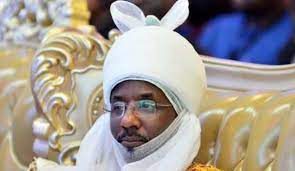
The 14th and former Emir of Kano, Mohammad Sanusi who visited Niger and held a discussion with the leaders of the military junta that overthrew the democratically elected government headed by ousted president Benzoin, last night was at the State House, in Abuja to brief president Bola Tinubu on the outcome of his visit adding that the current crisis in Niger Republic requires public diplomacy which should not be left to government alone.
Speaking with State House correspondents after his meeting with president Tinubu, Sanusi said, “I came to brief him on the details of my discussions with leaders of Niger.
“We’ll continue to do our best to bring the two parties together to improve understanding. This is the time public diplomacy, it’s not a matter that we leave to governments, all Nigerians, all Nigeriens need to be involved to find a solution that works for Africa, a solution that works for Niger that works for Nigeria and a solution that works for humanity.”
Fielding questions from newsmen, the former emir of Kano debunked opinions in some quarters that he was sent by the government stressing; “No, I was not sent by the government. Government officials were aware I was going, but it was my personal initiative, using my personal contacts to get there and I will continue to do my best. It is my duty as a leader to do that.”
Recall that since the coup in Niger, Nigeria and the Economic Community Of West African States, ECOWAS, to which the Nigeria’s president, Bola Tinubu is the Chairman have unequivocally condemned the coup and asked the coup plotters to relinquish their hold on power and hand over to the duly elected president, while warning them on the dire consequences of truncating democracy in the sub Saharan region of Niger.
The ECOWAS states have gone ahead to issue some sanctions on Niger even as there are insinuations that as a last resort, they may be forced to dispatch a joint force of the military to Niger.
Last week, the Senate refused to approve a request by president Tinubu for approval for a military action against Niger. Some of the reasons adduce by the Senate range from the fact that Nigeria and Niger are not only close neighbours but also share blood ties; similar religious and cultural leanings. They also intermarry and as such any action against them will affect their brothers and sisters in the northern part of Nigeria. Already, the decision by a bloc of West African nations to shut down their borders with Niger as a way of sanctioning its coup plotters is harming local businesses in northern Nigeria, where a cross-border economy has boomed for years.
While many within the sub-Saharan region and the international communities have denounced the coup, the people of Niger seem to have welcomed the new juntas as their messiah. Just last week tens and thousands of pro-junta protesters gathered in support of the coup in Niamey, Niger, giving them a veneer of popular support.
It is however, not clear which way the pendulum will swing, as the coup seems to have pitched many against one another. Tempers are frail and opinions are divided. Within the next few weeks, many hope that there will be an amicable and peaceful solution to the quagmire devoid of any war. How the leaders in the Sahel region will accomplish this feat remains to be seen
Meanwhile, top diplomats from the United Nations, African Union and the Economic Community of West African States will expectedly meet Thursday in Abuja, the nation’s capital, to take major decisions at an Extraordinary Summit on the political development in the Niger Republic.
The summit, which will be hosted by the Chairman of the ECOWAS of Heads of States and Government, President Bola Tinubu, will strategize on how to oust the junta and restore democracy to Niger