
By Our Reporter
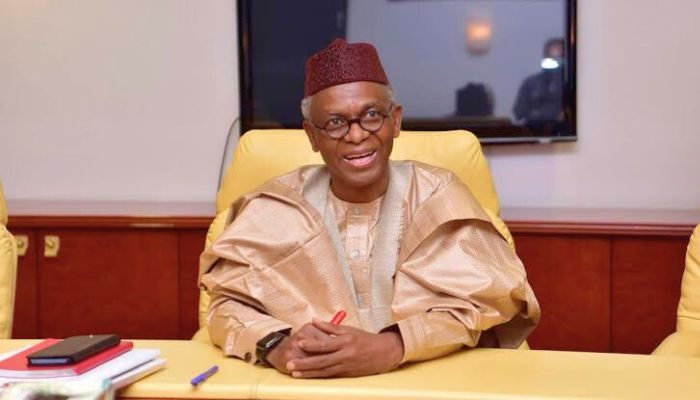
The former governor of Kaduna State, Mallam Nasir El-Rufai, has criticised the recent hike in electricity tariff from N68/kwh to N222/kwh, saying it is absurd in a country where the majority of the masses are grappling with basic survival and an electricity access rate of about 55 per cent.
El-Rufai also lambasted the political class, whom he blamed for being largely responsible for the problems in the power sector because of their lack of interest in solving the problem.
In a recent media chat, the Ex governor of Kaduna State was quoted to have denounced the politicians saying:
“The political class is multiplying the problems of the power sector because it is not interested in solving the problems. Members of the political class are the owners of the DisCos and GenCos. They are only interested in the revenue and grants given by the government.
He also added: ‘’The Buhari administration spent N1.7 trillion on Nigeria’s ‘broken’ electricity sector in three years. El-Rufai lamented that ‘the entire (electricity) sector is broken, noting that such expenditure by the Muhammadu Buhari administration on a privatised sector was ‘unsustainable.’
“Like we stated in our recent letter to the Minister of Power, there has been no meaningful improvement since the privatization of the power sector. The country has an installed capacity of about 14,000MW but generates about 4,803MW, meanwhile, Nigeria needs at least 30,000MW to reach sufficiency.
‘’The recent hike in electricity tariff from N68/kwh to N225 /kwh is absurd in a country where the majority of the masses are grappling with basic survival and an electricity access rate of about 55 per cent.
‘’The justification given by NERC is that the hike is attributed to only Band A consumers who make up only 15 per cent of electricity consumers and utilize 40 per cent of the nation’s electricity consumption. It begs to understand the sensibility of the person(s) that uttered such a statement purporting that it would not affect the general public.
“They need to answer these questions: Who are the Band A consumers? What do they do? Who are the customers of the Band A consumers? Who bears the brunt of the electricity hike?
‘’The general public is the one that will be most affected by this. They are the customers and end-users of the Band A products and services. The additional costs will be transferred to the common man, so they are indirectly being exploited notwithstanding their dwindling purchasing power and increasing impoverishment.
“Let’s look at these two scenarios: Company A uses 1000 kWh of energy in manufacturing and works for 24 hours a day.
‘’With the current hike, his daily energy cost will increase from N50,592,000 to N167,400,000 which is an additional direct cost of N116,808,000 i.e 231 per cent, not to mention the increase in the cost of their inputs as the costs of those will also be increased by the producers to accommodate their own increase.
‘’The price of company A in Band A products will go up by about 300 per cent and those in Band Z where there is no transformer will buy at the increased price. If they buy at a higher price, they are the ones paying the almost 300 per cent increase, not the manufacturer purported to be taxed.
‘’Company B, increased the price of its products in line with its new economic reality, consumers don’t have the purchasing power to buy at the new rate, and Company B will close down. As Company B closes down, some of its peers facing the same economic challenge will follow suit, and then unemployment will increase.
‘’If that happens, insecurity will be on an upward trend, and then the government will spend more than the money made in fighting insecurity which we haven’t been able to get hold of.
‘’The increased cost of goods will make Nigerian-produced goods unattractive as imported and smuggled items will be far cheaper than it. People will resort to those goods, thereby fuelling the economy and employment situation of the countries of import. Our manufacturing and business sectors will become comatose.
‘’The two scenarios above show that the hike in the electricity tariff is grossly detrimental to economic diversification, growth, and well-being of Nigerians.
‘’This is why the US, UK, France, Germany, and all developed economies support their factories with billions invested in power subsidies. Why is Nigeria different? Electricity in Egypt is an average of N21.68 per kwh, and in South Africa, it is N226 per kwh.
‘’The minimum wage in Egypt is N78,360, while in South Africa it is N328,395. The minimum wage in Nigeria is N30,000, while the new electricity tariff is N255 per kwh. A country that genuinely has the interest of its people at heart and wants to grow will ensure that the real sector is given the most support it can get, not putting a nail in its coffin.
‘’Furthermore, the safety of our members is at stake, as they are at risk of being attacked by people in the community when they visit for disconnections of light.
‘’The Minister of Power and NERC did not consult with the stakeholders in the sector before the increase. The minister of power has relegated himself as the spokesperson for the DisCos where he is justifying cost-reflective tariffs.
‘’What of Service Reflective Tariffs as it relates to consumers? We, as a stakeholder, do not know the energy policy of this present administration.”