
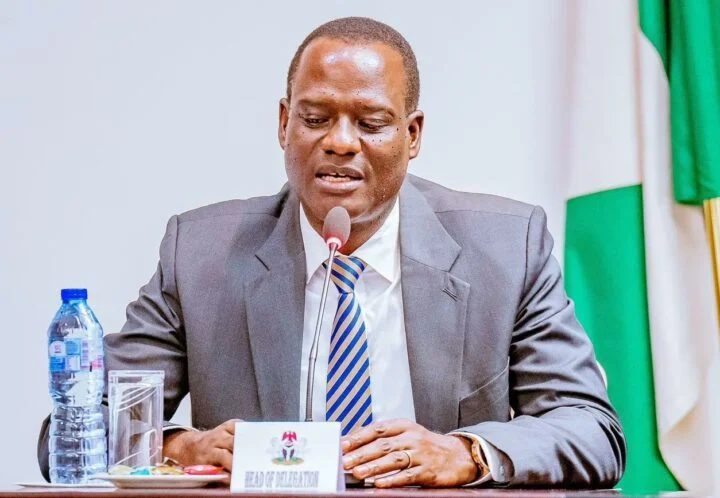
The Chairman of the Presidential Committee on Fiscal Policy and Tax Reforms, Taiwo Oyedele has said that the Tax reform bill currently before the National Assembly seeks to address national priority sectors like education, healthcare, and poverty alleviation, rather than needless projects.
Oyedele noted: “The reforms provide clarity on tax generation and expenditure. They emphasize addressing national priorities like education, healthcare, infrastructure, and poverty alleviation rather than unnecessary projects.”
He spoke during a one-day roundtable on tax reform bills organized by the National Institute for Legislative and Democratic Studies (NILDS) in Abuja.
Condemning the era when past spending was on ill-conceived and unviable projects like underutilized state airports, flyovers in low-traffic areas, and malls that remain largely unused while neglecting basic infrastructure like schools and healthcare centers, he assured that revenue generated from Value Added Tax, VAT, under the proposed tax reform, would not be misused.
He stressed that the measures infused in the reform bill would make it difficult for state governors or local council authorities to mismanage the funds or divert them into non-essential or unviable projects, adding the collection and expenditure allows for greater transparency and accountability.
He emphasized that the reforms would deal with and completely eradicate practices like borrowing foreign currency for domestic investments.
“VAT is considered state revenue, not part of the federation’s regular revenue. It goes to a special pool account shared among states and local governments, with a small portion retained by the federal government for administrative purposes.”
He dismissed allegations that the Federal Inland Revenue Service (FIRS) plans to engage tax consultants like Alpha Beta Company for VAT collection, asserting that the proposed reforms explicitly ban FIRS from hiring consultants for routine tax operations.
Senate President Godswill Akpabio cleared misconceptions about the tax reform adding that the reforms aim at improving Nigeria’s Fiscal Framework.
“The bills are designed to enhance efficiency, improve revenue generation, and build a more prosperous Nigeria. We, as representatives of the people, are committed to ensuring transparency and trust in this process,” Akpabio said.
Recall that the tax reform bill has elicited so much controversy from Nigerians since October 3, 2024, when President Bola Tinubu submitted four tax bills to the National Assembly based on recommendations by the Presidential Committee on Fiscal and Tax Reforms.
The bills include Nigeria Tax Bill 2024, Tax Administration Bill, Nigeria Revenue Service Establishment Bill and Joint Revenue Board Establishment Bill