
By Our Reporter
The Federal Government has reiterated plans to reduce its dependence on borrowing, intensify investment in the domestic economy and rely more on internal resources to fund development.
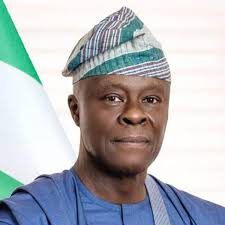
The Minister of Finance and Coordinating Minister of the Economy, Mr. Wale Edun, stated this during an interview with Bloomberg Television on the sidelines of the ongoing 56th World Economic Forum (WEF) in Davos, Switzerland.
Edun said the government’s fiscal strategy is now firmly anchored on revenue generation and domestic resource mobilisation, against the backdrop of global economic pressures and Nigeria’s ongoing reform agenda.
“The issue now is to focus on revenue, focus on domestic resource mobilisation. We’re hoping to rely less on borrowing,” the minister said.
While noting that Nigeria could still access international bond markets if the need arises, Edun stressed that the priority of the Bola Tinubu administration is to strengthen fiscal sustainability through reforms at home.
He outlined ongoing efforts to raise tax revenue, broaden the tax base and improve collection efficiency as part of measures to reduce borrowing while expanding government income.
Since assuming office in 2023, President Tinubu’s administration has rolled out a series of economic reforms aimed at stabilising public finances and boosting growth. These include the removal of foreign exchange restrictions, the elimination of the costly fuel subsidy, and a comprehensive overhaul of the tax framework.
As part of the reforms, the government is targeting an increase in tax revenue to about 18 per cent of Gross Domestic Product (GDP) next year, up from roughly 14 per cent currently.
Edun said the policies are designed to support long-term economic sustainability and reduce Nigeria’s reliance on external debt, while also strengthening investor confidence.
Economic forecasts suggest the reforms are beginning to yield results. The International Monetary Fund (IMF) recently upgraded Nigeria’s growth forecast to 4.4 per cent for 2026, from an estimated 4.2 per cent in 2025, despite weaker global oil prices.
The IMF noted that Nigeria’s reforms are expected to stabilise revenue collection and support fiscal sustainability. According to the Fund, “the combination of domestic resource mobilisation and ongoing reforms underscores Nigeria’s effort to reduce debt dependence and strengthen its economic foundations.”
At the Davos meeting, Edun is expected to engage investors on policy consistency, inflation, foreign exchange stability and fiscal sustainability.
Nigeria’s participation at WEF 2026 is framed by broader global challenges facing emerging markets. The country is also debuting its first official national pavilion, Nigeria House Davos, launched on Monday by Vice President Kashim Shettima.