
By Mary Onyia
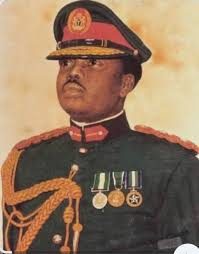
On Thursday, Nigeria marked the anniversary of former Head of State Murtala Muhammed’s assassination. He was killed on February 13, 1976, during a failed coup that stunned the country and the world. Fifty years later, political leaders, diplomats, and admirers gathered to remember a leader known for his decisive and transformative rule.
The commemorative ceremony, held at the Murtala Muhammed Arcade in Abuja, drew dignitaries from across Nigeria’s political and diplomatic space. Representing President Bola Tinubu was the Secretary to the Government of the Federation, Senator George Akume. Also in attendance were Professor Ibrahim Gambari, the former Chief of Staff to ex-President Muhammadu Buhari, the Ambassador of Angola, and other top government officials.
Speakers at the event described the late general’s leadership as “brief but very remarkable,” noting that though his time in office lasted barely 200 days, its impact continues to resonate decades later. They recalled his strong anti-corruption drive, decisive administrative reforms, and firm commitment to discipline and accountability in public service.
Muhammed came to power in July 1975 following a bloodless coup that removed General Yakubu Gowon after nine years in office. Gowon himself had assumed leadership in 1966 after the death of General Johnson Aguiyi-Ironsi during a counter-coup that deepened the political crisis preceding Nigeria’s civil war. Muhammed’s emergence was seen at the time as a turning point for a nation yearning for direction and reform.
Within months of taking office, he initiated a series of sweeping changes. Over 10,000 public officials were dismissed in a bold anti-corruption purge. He created seven additional states to bring governance closer to the people and set machinery in motion for a return to civilian rule. His administration also began the historic process that would eventually relocate Nigeria’s capital from Lagos to Abuja.
However, on the morning of February 13, 1976, his reformist momentum was violently halted. He was assassinated in Lagos during an abortive coup led by disgruntled officers. His deputy, Olusegun Obasanjo, subsequently assumed office and continued aspects of the transition programme that culminated in the handover to civilian rule in 1979.
Born in 1938, Murtala Muhammed was known for his blunt honesty, austere lifestyle, and intolerance for corruption and indiscipline. Fiercely patriotic and action-oriented, he projected the image of a leader in a hurry to reset Nigeria’s course. Though he did not live long enough to fully implement his ambitious restructuring plans, comprehensive public service reforms, and accelerated democratic transition, his name endures as a symbol of bold leadership and uncompromising resolve. Five decades after his death, Nigeria still remembers the soldier who ruled briefly—but left lasting footprints the country’s socio-political history.