
By Our Correspondent
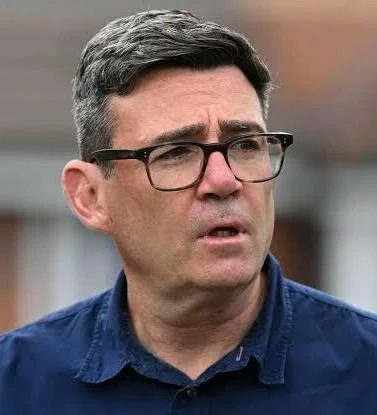
Andy Burnham became Britain’s new Prime Minister on Monday, promising to “do things differently” as he took over from Keir Starmer. In his first speech outside 10 Downing Street, Burnham acknowledged growing public frustration with politics, saying, ” I know people at home are fed up with politics… we have not been good enough and we need to be better. We will be.” He pledged to rebuild public trust, devolve more powers from Westminster, improve public services, tackle the cost-of-living crisis, and reduce homelessness, adding that his government would make the moment ” a circuit breaker for Britain.”
The 56-year-old’s rise to the country’s highest office marks an extraordinary political comeback. A former Health Secretary under Gordon Brown, Burnham twice failed in his bids for the Labour leadership before leaving Parliament in 2017 to become the first elected Mayor of Greater Manchester. There, he rebuilt his national reputation by championing regional interests and standing up for local communities during the COVID-19 pandemic. Declaring that he would ” break with the more of the same approach that has hurt us here,” Burnham returned to Westminster to lead Labour and ultimately become Prime Minister.
Burnham assumes office at a time of slow economic growth, rising living costs, and mounting pressure on public services. He said Britain needed ” a new political model and a new economic model,” and promised to return stability to government while giving more power to local communities. His administration is expected to focus on regional development, strengthening the National Health Service, expanding devolution, and improving living standards without abandoning fiscal discipline.
For the Labour Party, Burnham’s leadership offers an opportunity to reconnect with traditional working-class voters while broadening the party’s appeal across Britain. His emphasis on regional growth, social justice, and cooperation reflects his long-held belief that politics should be ” more collaborative, more about problem solving than point scoring.”
For Britain, Burnham’s arrival marks the beginning of a new political chapter. Whether he can translate his promise to “do things differently” into lasting reforms will determine not only the success of his government but also whether Labour can restore public confidence and steer the country through its economic and social challenges. As Burnham himself put it, ” Britain needs to show the world that we can regain our stability once again.”