
By Our Reporter
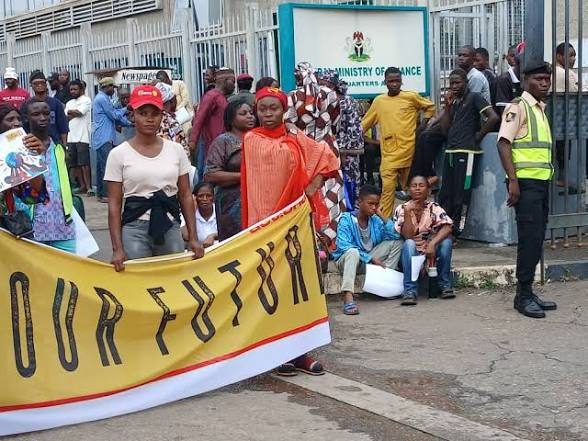
Civil society organizations, youths, students, and market women gathered at the Federal Ministry of Finance in Abuja on Thursday to demand an end to what they called excessive borrowing by the Federal Government. Under the Climate Action banner, the protesters pointed out that the rising debt-servicing burden was diverting funds from essential public services and limiting resources needed to fight poverty, unemployment, and climate change.
Armed with placards, the demonstrators urged the government to cut its reliance on loans from the World Bank, International Monetary Fund (IMF), and other development finance institutions. They also demanded greater transparency in managing public debt and called for more resources to be allocated to sectors that directly benefit Nigerians’ welfare and livelihoods.
Representing the protesters, ActionAid Nigeria Social Mobilisation Specialist Newton Otsemaye said the demonstration was meant to highlight the impact of Nigeria’s increasing debt on future generations, especially young people. “Save the future of Nigerians. We have the largest young population in Africa, if not globally. But what are we doing with their future?” he asked, stressing that government priorities should focus on people rather than lenders.
Otsemaye explained that the Finance Ministry was targeted because of its key role in managing the country’s finances and public debt. “We have so many groups here. We have women’s groups, activists, young people, and university students. It is a mix of different groups, but one demand,” he said, adding that continued growth in the debt-to-revenue ratio could worsen poverty, unemployment, and the loss of livelihoods.
The protest comes amid ongoing worries about Nigeria’s debt burden. The Debt Management Office reported a total public debt of ₦159.28 trillion as of December 2025, up from ₦144.67 trillion a year earlier, and its records indicate ongoing quarterly reports of debt-service obligations in 2026. The protesters, therefore, called on the government to limit new borrowing and reallocate resources to public services, social protection, and productive sectors of the economy.