
By Felix Olukayode
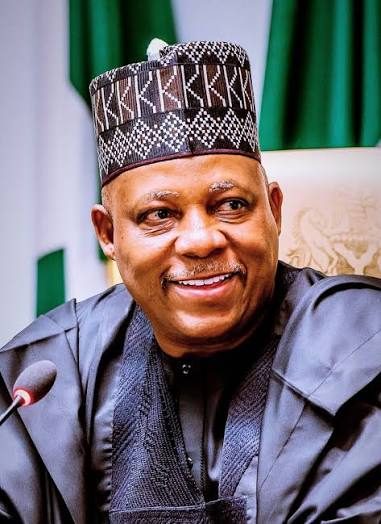
For the first time in recent years, the presidents of Africa’s three largest economies by nominal GDP- South Africa, Egypt and Nigeria- will all be absent from the 81st United Nations General Assembly in New York, leaving senior officials to represent their countries at one of the world’s most important diplomatic gatherings. South Africa’s President Cyril Ramaphosa, Egypt’s Abdel Fattah el-Sisi and Nigeria’s Bola Tinubu will not personally attend the high-level session, which opens its General Debate on September 22 under the theme, “Restoring trust, managing transformation: A United Nations that delivers for all.” Their countries, however, remain fully represented, with Foreign Minister Ronald Lamola leading South Africa’s delegation, Prime Minister Moustafa Madbouly representing Egypt and Vice-President Kashim Shettima heading Nigeria’s delegation.
The circumstances behind the three absences are different. Ramaphosa withdrew from public engagements on September 16 after returning from the BRICS summit in India, following medical advice that he rest and recover; his office did not disclose further details about his condition. His absence comes amid renewed diplomatic friction between Pretoria and Washington after the United States announced visa restrictions targeting certain South Africans over policies Washington describes as discriminatory, allegations the South African government rejects. Lamola therefore arrives in New York at a particularly sensitive moment in US-South Africa relations. In Egypt, Madbouly is again representing Sisi, as he did at last year’s UNGA, when he led the Egyptian delegation on the President’s behalf. Cairo’s priorities remain heavily focused on Gaza, the Palestinian question and efforts to prevent further regional escalation. In Nigeria, the Presidency has mandated Shettima to represent Tinubu for the third consecutive year, while Nigeria’s UN envoy, Jimoh Ibrahim, has stressed that the country will remain fully engaged in the General Assembly.
Tinubu’s repeated absence, however, has already assumed a distinctly political dimension at home. Former Vice-President Atiku Abubakar has demanded an explanation, arguing that three consecutive presidential absences can no longer be regarded simply as routine delegation. He contended that while Shettima can represent Nigeria, presidential presence at UNGA provides opportunities for direct engagement with other heads of government, investors and international institutions. The Presidency, for its part, has reportedly rejected suggestions that Tinubu’s absence reflects any problem with the United States, while Nigeria’s UN envoy has described the country as adequately represented.
The simultaneous absence of the three presidents nevertheless carries considerable symbolism. South Africa, Egypt and Nigeria are projected by the IMF to be Africa’s three largest economies by nominal GDP in 2026, giving them substantial economic and diplomatic weight on issues ranging from trade and investment to development finance, security and global governance. South Africa is a major BRICS and G20 player; Egypt remains a pivotal actor in Middle East diplomacy and a key African-Arab interlocutor; while Nigeria is West Africa’s largest economy and a major regional security and diplomatic power. Their absence does not diminish the formal representation of their countries, but it does mean that Africa’s three biggest economies will lack presidential representation at a moment when the continent is pressing for greater influence in global institutions, including reform of the UN Security Council and the international financial architecture.
The practical impact may ultimately be limited because the officials representing the three countries are senior political figures with authority to speak and negotiate on behalf of their governments. Shettima, Lamola and Madbouly are expected to participate in high-level meetings and bilateral engagements alongside the General Debate. Yet the optics are harder to dismiss: at a UNGA dominated by wars in the Middle East and Ukraine, economic tensions, climate concerns and the transition to a new UN secretary-general later this year, the absence of the leaders of Africa’s three largest economies leaves their deputies and ministers to occupy a diplomatic space normally commanded by presidents.
For Africa, the message is therefore mixed: its principal voices remain present, but not at the highest political level.