
By Mary Onyia
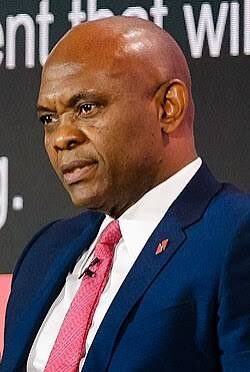
Africa’s economic development is being held back not by a shortage of entrepreneurial talent but by inadequate capital to finance promising businesses, founder of the Tony Elumelu Foundation (TEF), Mr. Tony Elumelu, has declared.
Elumelu, who argued that the continent must move away from dependence on foreign assistance, said investment and trade, rather than aid, offered a more sustainable pathway to economic transformation.
He illustrated the magnitude of Africa’s funding gap with the experience of his foundation, which received 265,529 applications from young Africans seeking business support in 2026 but could only provide funding to 3,200 applicants, leaving more than 262,000 aspiring entrepreneurs without assistance.
“This, therefore, is not a shortage of entrepreneurial talent in Africa. It is a shortage of capital”, he said.
Elumelu spoke at the 25th annual conference of Women in Management, Business and Public Service (WIMBIZ), held at Eko Hotels and Suites, Victoria Island, Lagos.
Addressing the theme, “The Geography of Opportunity: Why the World Needs What Africa Has”, the businessman called for a fundamental shift in how African countries finance their economic development, arguing that the continent must mobilise its domestic financial resources to support businesses and industrial growth.
The future is investment and trade, not aid”, he declared, urging African countries to develop the capacity to finance their own development rather than rely excessively on external assistance.
He specifically identified pension funds, banks, insurance companies and family offices as critical sources of funding that could transform the continent’s entrepreneurial landscape.
According to him, these institutions should do more to channel domestic savings into productive businesses instead of concentrating their investments in government securities or keeping funds outside the continent.
“The most important thing Africa needs to build in the next decade is African capital that invests in Africa”, he said.
Beyond access to finance, Elumelu identified electricity, value creation and intra-African trade as other major obstacles holding back the continent’s economic potential.
On electricity, he maintained that Africa’s industrialisation ambitions and participation in the emerging artificial intelligence economy would remain largely unrealised without reliable power supply and connectivity.
We cannot talk about industrialisation without fixing electricity. Factories cannot run without it. Hospitals and schools cannot function without it”, he said.
He also challenged African governments and businesses to abandon the traditional model of exporting raw materials and importing finished products, insisting that the continent must increasingly process, refine and add value to its natural resources.
“If the power is reliable, if the environment is right and enabling, why ship raw lithium, raw cocoa, raw crude out of this continent, refine it, process it, brand it, then sell it to the world?”, he queried.
On regional commerce, Elumelu lamented the low level of trade among African countries despite the establishment of the African Continental Free Trade Area (AfCFTA).
He observed that less than a fifth of Africa’s trade was conducted within the continent, describing the situation as a major impediment to economic integration and business expansion.
“It is easier today to ship goods from Lagos to Liverpool than from Lagos to Luanda. Less than a fifth of our trade is with each other”, he said.
He called for massive investment in roads, railways, ports and payment infrastructure, as well as improvements in customs procedures, to facilitate the movement of goods and services across African borders.
According to him, African businesses must begin to see the continent as a common market rather than operate within the limitations of individual national economies.
Meanwhile, the businessman called for greater recognition and financing of women-owned businesses, arguing that women had consistently demonstrated their ability to build successful enterprises but continued to face unequal access to capital and business opportunities.
“Women’s economic leadership is not a concession to fairness; it is a requirement for competitiveness”, he said.
Citing the experience of the Tony Elumelu Foundation, he disclosed that he and his wife, Awele, had committed more than $100 million in seed capital to 24,633 young entrepreneurs across all 54 African countries over the past 15 years.
According to him, businesses supported by the foundation have created more than 1.5 million jobs and generated over $4.2 billion in revenue.
He noted that women entrepreneurs supported by the foundation had demonstrated impressive business performance, particularly in reinvesting profits and employing more workers.
“We see our women entrepreneurs at the Tony Elumelu Foundation reinvest, and we see them rehire at rates our male entrepreneurs should envy”, he said.
Elumelu also traced his appreciation of women’s entrepreneurial abilities to his childhood experience with his mother, who operated a small restaurant and taught him practical lessons about business management, cash flow, risk-taking, discipline and resilience.
He said his experience had reinforced his belief that women were already playing critical roles in African business but were frequently denied the financial resources and recognition required to expand their enterprises.
“When people ask me whether women can lead African business, I find the question strange because in my own experience, they already do. We have simply not given them the capital, the title, or the credit they deserve”, he said.
The 25th annual WIMBIZ conference, themed “Rooted, Rising, Ready: Born in Africa, Built for the World”, brought together business leaders and professionals from different sectors to discuss women’s economic participation, leadership and opportunities for growth.
WIMBIZ is a non-profit organisation committed to promoting and supporting women’s participation in management, business and public service.