
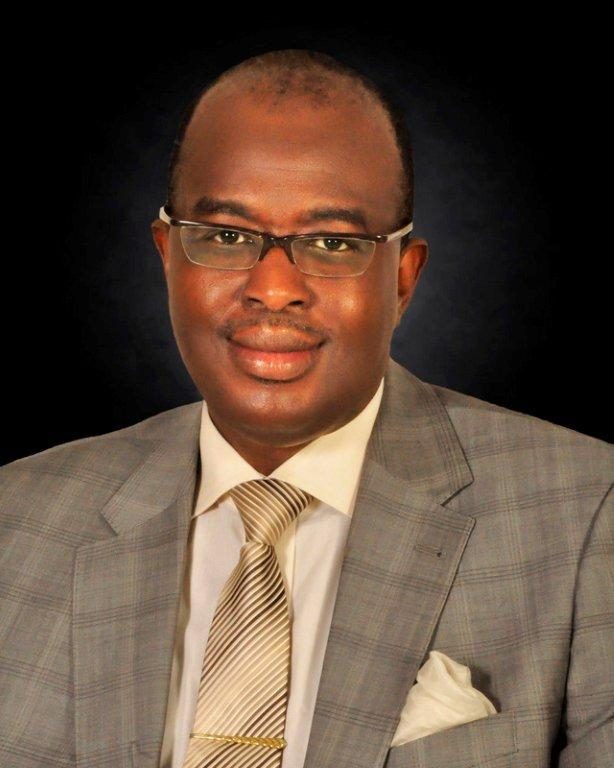
The outgoing Director-General of the Nigerian Employers’ Consultative Association (NECA), Olusegun Oshinowo, has said that unless the country accepts restructuring as the way forward, issues of insecurity, poverty, and unemployment would never be addressed meaningfully.
He also tasked government on the creation of a federal structure with the best of economic policies that would allow the citizens embrace policies without being forced.
Oshinowo said this during a farewell press briefing, announcing his exit as the director-general of NECA, where he held sway for 19 years.
He said government’s policies should be focused on free market enterprise, where regulatory agencies create an environment for business support, rather than seen as killers of business.
According to him, state governments should take control of their states while they build their own infrastructure.
Oshinowo, who said Nigeria is far off from the United Nations’ standard on policing, said Nigeria’s security framework is not fully established, as we allowed the menace to creep in on us because of structural issues.
Giving an insight into his stewardship as the former director general of NECA, Oshinowo said his biggest regret was the absence of good governance in Nigeria, as it has failed to improve the living standard of the citizenry.
According to him, a measure of relevance of government is how well the citizens are faring, in terms of welfare and their expectations.
Oshinowo, who called for a changed narrative in governance, said: “Any government that has not lifted the people from poverty has no business being in government. Real strength for an economy is having a healthy income to support the economy.”
Oshinowo, who commended the media for their support during his reign, also solicited the co-operation for the incoming director-general, Timothy Olawale, who will take over on January 1, 2019.
On his next move, he said he would be involved and active in empowerment programmmes, as he was passionate about youths embracing entrepreneurship.
He added that the future of the youth is not guaranteed due to the high rate of unemployment in Nigeria.
In his remark, Olawale, said the association would continue to deepen the relevance of members as well as sustain empowerment for human capital development to deliver tools for vision in the next five years.
In another development, the President, Manufacturers Association of Nigeria (MAN), Mr. Mansur Ahmed, has said that smuggling is affecting trade in the West African sub-region.
He stated this at a news conference with stakeholders at the ninth Trade Ministers Forum on West African Monetary Zone in Abuja.
The theme of the forum was “Harnessing intra-West Africa Monetary Zone (WAMZ) trade potential through value addition and diversification.”
Ahmed identified smuggling as a major challenge to West Africa’s free trade agreement, urging governments of the region to address the scourge to ensure smooth trade among member states.
Ahmed said apart from the problem of smuggling, some counties that are not members have taken advantage of the free trade movement agreement to sell their goods in the region.
According to him, such countries package their goods in the names of member countries deceitfully to enable them sell their goods without hindrance.
The MAN chief, therefore, charged customs authorities in member states to tackle smuggling.
He decried the inability of Small and Medium Enterprises (SMEs) to access finance as a major problem affecting smooth trade in the sub-region.
He said in Nigeria, there were various initiatives by the Central Bank of Nigeria (CBN) for SMEs to access funds but, was being hampered by the stringent conditions attached to the funds.
Also, the West Africa Monetary Institute (WAMI) Director-General, Dr. Ngozi Ejbuna, said the forum had made some recommendations on the promotion of trade in the sub-region.
She revealed that the issue of harmonised standard products on competitive advantage in the zone was discussed.
She also said the resolutions of the meeting would be presented to the ministers for ratification.
Liberia’s Central Bank Governor, Mr. Nathaniel Patray, stressed the need for governments in West Africa to create the enabling environment for smooth trade in the sub-region.
Patray explained that African governments must remove trade barriers, ensure access to finance for businesses as well as provide good leadership for business to thrive.
He said having an enabling environment was key and important for business to flourish in any part of the world.
He urged member states to remove things disturbing businesses from moving forward in the region, noting that there was the need for governments to address problems affecting businesses by re-examining their domestic policies.
Patray further urged governments the sub-region to increase salaries and wages of officers and men manning the borders to prevent corruption.
He regretted that some officers compromise by taking bribes at the border posts, an attitude, adding that it is hampering trade.