
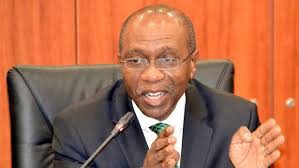
Officials of the Central Bank of Nigeria (CBN) and the Economic and Financial Crimes Commission (EFCC) have met with the aim of strengthening the country’s fight against economic crimes including violation of the foreign exchange restrictions on the 42 items.
The meeting, which took place at the Head Office of the CBN in Abuja, provided an opportunity for the two entities to share experiences and peculiar challenges in the fight against economic-related crimes.
CBN’s Director of Communications, Isaac Okorafor, disclosed this saying the two agencies adopted strategies aimed at curtailing the unwholesome activities of economic saboteurs which include smuggling of commodities like rice, textile materials, fertilizer, wheat and other items on the prohibition list for accessing foreign exchange through official window, as well as tracking illicit financial flows.
Other areas which the two agencies are collaborating include anti-money laundry and the monitoring of politically exposed persons in the country.
The inter-agency meeting, chaired by the Director, Governors’ Department of the CBN, Mr. Jeremiah Abue, also agreed to improve the level of information-sharing and surveillance of the financial sector.
It would be recalled that the CBN under the auspices of the Bankers’ Committee had said that any individual or corporate body found complicit in economic crime or attempts to circumvent economic laws and regulations of the country may be barred from operating a bank account in any bank in Nigeria.
In another development, an NGO, Japan International Cooperation Agency (JICA) Alumni Association of Nigeria (JAAN) and the Japanese Government have partnered to train local farmers on post-harvest rice processing.
Speaking at a three-day workshop in Karshi in the FCT, President of JAAN, Mr. Ahmed Ehijie Agberankhe, said the training was one of a series organised by JAAN in collaboration with JICA Nigeria Office aimed at improving the lot of Nigerian farmers.
Agberankhe said the training was for local rice farmers to use a very simple technology in processing rice to match international standards.
Representative of the Japanese Embassy, Mia Nakano, said the partnership was the Japanese Government’s aim of improving the lives of Nigerians as it shared a lot in common with Nigeria.