
The Nigerian Office for Trade Negotiation (NOTN) has said that the African Continental Free Trade Agreement (AfCFTA) will assist to address the issue of unemployment, market access and economic growth for Nigeria and Africa.
The African Union Commission Deputy Chairperson, Ambassador Kwesi Quartey had stated that the AfCFTA is expected to boost consumer spending to about $1.4 trillion in 2020 and increase intra-African trade by as much as US$35 billion per year, or 52 percent above the baseline by 2022.
“But in order to trade, Africa first has to produce; and not just primary commodities. We must begin to apply science and technology to production. Statistical evidence has demonstrated that intra-African trade has tended to be mainly in processed foods, that is, goods and commodities to which value has been added,” he said.
The Director-General of NOTN, Ambassador Chiedu Osakwe, said this during a stakeholder’s forum on the African Continental Free Trade Agreement organised by the Lagos Chamber of Commerce and Industry (LCCI) in Lagos.
AfCFTA is an initiative of the African Union (AU) to create a single continental markets for goods and services, as well as a customs union with free movement of capital and business travellers.
Osakwe noted that about one million Nigerians and an estimated 18 to 20 million Africans enter the job market yearly, adding that AfCFTA would not only address unemployment issues but deepen intra-Africa trade and regional integration for economic development.
The ambassador noted that AfCFTA was much more than a trade agreement but a deal that strategically reorganises the geo-economic landscape of Africa, Nigeria’s leadership position, competitiveness and modernisation.
He noted that certain provisions were placed in the Articles of agreement to safeguard local economies, especially manufacturers and SMEs.
According to him, Exclusive and Sensitive list, Modification of Schedule, Trade Remedies which addresses issues of anti-dumping, Special Economic Zones and Infant industry protection; serves as some of the provisions.
He said that the provisions could be reviewed periodically to modify the agreement of each member countries; adding that consultation with various trade organisations, manufacturers, unions was ongoing nationwide to sensitise them on AfCFTA economic benefit.
Osakwe said that AfCFTA would birth the largest free trade area in the World, in terms of numbers of countries, population of 1.2 billion people and $4 trillion, if all 55 countries in Africa signed the agreement
LCCI President, Babatunde Ruwase, said that Nigeria’s argument for not signing AfCFTA was the fear of numerous bilateral trade agreements of some AU countries with the rest of the world and Nigeria’s underdeveloped industrial and infrastructural sector.
“It has been argued that this will make Nigeria a dumping ground due to our uncompetitive manufacturing profile, market size and population.
“These are legitimate concerns, it is therefore imperative to deepen consultation across all sectors, in order to address these genuine concerns from stakeholders,” he said.
LCCI’s Chairman, Economic and Statistics Committee, Dr. Ayo Teriba, said that the trade negotiator needs to further sensitise the public on the benefits of the agreement to Nigerians economy, the traders, SMEs manufacturers and consumers.
He added that the negotiator should be explicit about what could go wrong in signing the agreement and how to mitigate it toward allaying people’s fear and protecting the economy.
An official of New Partnership for Africa’s Development (NEPAD), Dosumu Oluwole, said that the country needs to address issues of infrastructure challenges, economic stability and competitiveness, before it could benefit from signing the agreement.
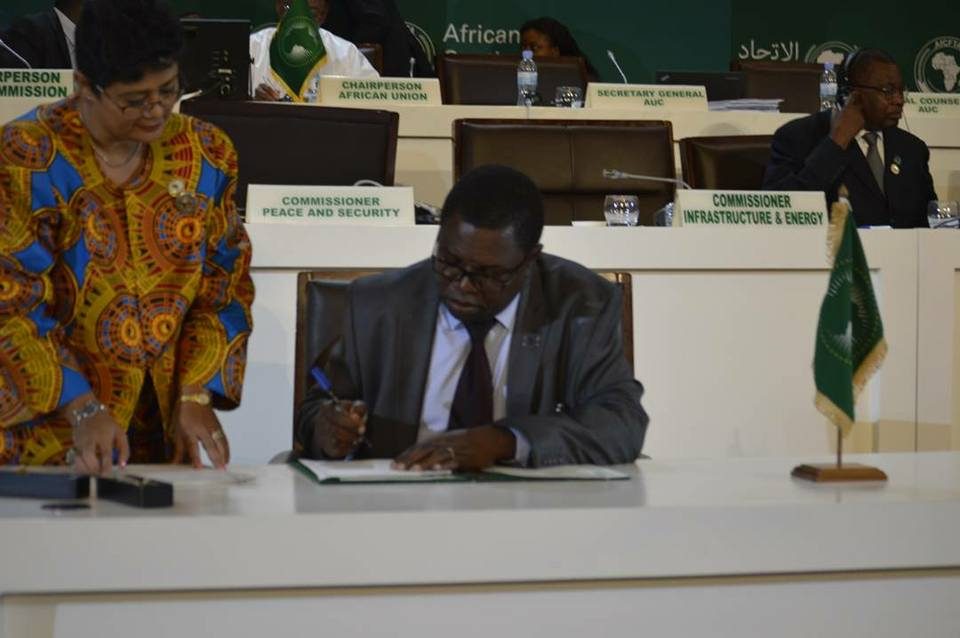
Forty-four 44 African countries signed the agreement on March 21 during the 18th Extraordinary Session of the Assembly of AU Heads of State and Governments in Kigali, Rwanda.