
By Geraldine Onyenweaku
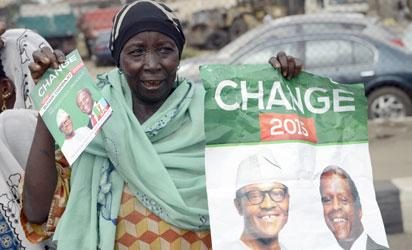
In 2015, when General Muhammadu Buhari {Rtd.} contested and won the election under the auspices of the All Progressive Congress, APC, party on the ‘change’ mantra, many believed the party was going to bring about the necessary change and bought into the project.
Six years on, it appears to have dawned on the majority of the people that Buhari and his cohorts had sold to the people of Nigeria a ‘pig in a pork’. The ‘change’ the APC party promised came but not in the way and manner they had expected. The much touted ‘change’, was a negative packed change that did no one no good, except the few involved in Buhari’s extractive government. The administration has among things been accused of being very ‘sectional’ taking care of the interest of a minority. This administration has been criticized for bringing more pains, more misery, more deaths {like has never before been recorded under any democratic government}, more strife and greater divisiveness. These were not what the people had hoped for. The negative effect of the ‘preferred’ change has caused many to advocate for a ‘shrinking’, if not outright stoppage of the professed ‘change’.
Taking a look back at how Nigerians found themselves in the position which many described as the biggest ‘ponzi’ scheme ever in the political life of a nation. In 2011, Goodluck Jonathan, had won the election for another four years, after serving out the remaining two years of his predecessor, Alhaji Musa Yaradua, whose tenure was truncated following his death. Jonathan came in on a slogan of ‘A breath of fresh air’, promising a complete break from the old ways of doing things. Consequently, Jonathan mounted the saddle with promises of ‘better life’. Among his promises were: improvement in electricity, providing an enabling environment for productive activities and businesses to thrive, job creation, growing the economy among others.
Despite Jonathan’s seemingly sincere actions to make true his promises, he fell short of expectations in some key areas; for instance corruption under his administration reportedly rose from 23.9 per cent by 2010 to 24 per cent by 2014, according to figures from the National Bureau of Statistics.
These among other complaints were the plank on which the opposition led by General Muhammadu Buhari came into power declaring ‘change’. Buhari, following his successful outing at the election of 2015, took over the baton of leadership poised to effecting the change he promised among which was an equitable distribution of wealth.
But this was not to be, going by the perception of many, as six years on, Buhari’s government has come under serious knocks by both allies and critics alike at what they unanimously perceive as ‘gross’ inability to fulfill those promises made.
At the onset of the Buhari’s administration, the retired general had massive challenges to deal with ranging from pervasive poverty, rising unemployment, corruption, epileptic power supply and fuel crisis. Others are banditry, insurgency, secessionist agitators, kidnappings to name a few. On all of these fronts, critics say the government has failed ‘woefully’, accusing the Buhari led government of succeeding in inflicting more pains on the people rather than alleviating them.
In view of all these, the people are of the opinion that the so called ‘change ‘ promised them was a ‘negative’ change and not the positive change they had expected ,thereby leaving them ‘hugely’ disappointed,
Cost of living has risen beyond the reach of the ‘average’ Nigerian, what with an imminent food crisis, even the least of it all, food, is simply unavailable. The farmers/herders crisis, which has degenerated into killings and kidnappings, has driven farmers out of their farms; while their farm products get eaten up by cattles. The lack of strong economic policies and sincere commitment on the part of this government to pursue good economic policies with vigour, has caused many companies; local and foreign to relocate their businesses to neighbouring African countries with ‘friendlier’ policies and more stable and peaceful environment; leaving most of our growing youth population without jobs, resulting in massive unemployment. This has given rise to ‘419’ activities or what can be best described as internet fraud by youths desperate to survive. On the professional angle, the country has continued to experience unabated brain drain as professionals look ‘outside’ the shores of the country for gainful employment.
The perceived lack of ‘inclusiveness’ in the government of Buhari has also increased agitations for secession by groups from different parts of the country to a level never before known in the country. The secessionists groups Claim they feel left out and ‘marginalised’ by this government.
Of course, there have been factors beyond the control of this administration that have thrown a clog in the wheel of its progress; the COVID-19 pandemic – a world disaster- which left the world economy in paralysis for a reasonable length of time with its attendant lockdown, Nigeria not exempted is one major factor.
The pandemic aside, political analysts believe that for all the other problems bedeviling the nation, a government that is more ‘cerebral’ would have devised a way to deal with its domestic problems in such a way that it does not derail it from its planned goals. For instance, the killings in different parts of the country resulting in the ‘avoidable’ deaths witnessed in the course of this government would have been averted through dialogue and diplomatic pressures to prevent the country falling apart as it has. The government’ think tank’ should have envisioned these problems, nipped it in the bud by establishing or creating an atrocity prevention board designed to provide early warnings of mass violence and organize a response. By so doing, this government would have avoided most of the atrocious acts and distractions that have tended to mar it. A more timely and less dramatic actions could have helped ward off all the slaughter and the miseries.
It is for this that many are of the opinion that the Buhari government should either scale down on its ‘change’ project or redesign it entirely to conform to the wishes and expectations of the people. It is never too late, as the government still has one and a half years to correct any missteps. History would still be ‘fair’ to this government.