
By Geraldine Onyenweaku
This is one dreaded disease that most women don’t want to imagine let alone experience. Working as a journalist with one of the soft sell magazines many years ago, we did a piece on breast cancer and got a lot of ideas and perspectives from women who suffered or knew someone who suffered the disease and survived it. Most of what we did on that edition of the magazine bordered on ‘breast cancer’ and the survivors, which more or less tried to remove the grim aspect of it. At least to those of us who ran the interview it was some sort of comedy so to speak- All is well that ends well.
Unfortunately, however, this is not the case with many others. There have been very many who had had their lives cut short at the prime of their lives, owing to ignorance of the disease. For some obscure reasons, many of these women had come to associate the diagnoses with a ‘death sentence’. But luckily for most people, scientists have allayed any fear this might cause in that with improved technology, this cancer can be detected on time and cut off before it has any chance of causing any damage.
If, this is the case, one might ask, ‘why do people in this age and time still die of the disease?’
Just last year alone, two women I know very closely lost their lives to this dreaded disease at ages when I would say they still had a lot to offer their families, communities, nation and the world. For close family members it was very devastating. They both left behind husbands and children who still needed their valuable contributions to their respective families. They were both very vibrant and lively women who never thought they would die so soon, years before the discovery. You would probably say, neither of them was aware of her breasts, so the invader had ample time to snuff out their lives.
I have been told , on enquiry, by most doctors that breast cancer is the easiest type of cancer to get rid of, once it is seen and noticed on time, unlike cervical, ovarian, lung and other types of cancer that cannot be seen, felt or noticed early enough until it is too late because they grow inside the body.
And the ‘big’ question is: If this is the case, then why do we still have many women die of breast cancer? Could it be due to a lack of awareness on what routine check to have and what to look out for; what to do and who to meet for professional advice? Speaking of Nigeria, because I know in most advanced countries, death resulting in breast cancer is a thing of the past- not heard of.
In Nigeria, our culture and background tend to get in the way in the manner we treat issues of the breast and the scourge. Women find it difficult to open up to others about issues concerning their breasts. This is because the breast to them is seen as a very private part of the body, not to be seen by others apart from their husbands and for breastfeeding. The primary duty of the breast is for suckling babies and when the babies aren’t there their husbands get to play with it. Aside these, not too many women in this part of the clime give a thought to their breasts in terms of knowing how healthy they are or not. That is primarily why most die unnecessarily of breast cancer, seen in other climes as a preventable death.
But, how do we change the narrative? How do women spot this ‘intruder’, called breast cancer early enough and resist it with all the strength and vigour that medical science and technology has made possible? We need more awareness. Women especially must be thought how to be ‘BREAST AWARE’. Efforts must be made by individuals, groups and government agencies as well as Non- Governmental Organisations, NGO’s to kick off the breast awareness campaign in every nook and cranny and to be ready to provide both advisory and financial aids to sufferers as well as help provide the equipment that help spot out the cancerous lump in good enough time to commence treatment. Findings reveal that a lot of women in Africa die of breast cancer either because they are not well informed and are misled for lack of a better place to go for treatment or who to meet, they die prematurely, leaving behind a trail of heartaches and regrets by those left to mourn them.
Every woman should make it a point of duty to devise a routine breast check, do a Breast Self -Examination every month and read up materials on breast cancer or if possible attend seminars or go for counseling, where proper dietary habits and exercises can be discussed thoroughly in addition to other medical options available. It is important to note that if there is a lump in the breast, it cannot be wished away. The best thing is to visit the nearest health facility and complain about your discovery. Let them have it tested, and from then, depending on what they discovered they can offer you the best possible medical advice.
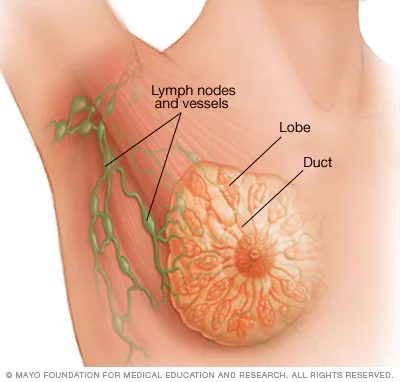
It is always best to start clinical breast examination early in life between ages 20 and 30 especially for women with a family history of breast cancer. And by around age 40, such women should commence annual mammogram. This will help identify cancers that are still in their early stages and are confined to the ducts.
It is about time we all resolved to attack this killer scourge that kills people’s lofty dreams and cut short lives at their prime. We should take our future in our hands and not allow this wayward disease to determine our tomorrow and steal our joy.
Breast cancer is real, be elightened not frightened!