
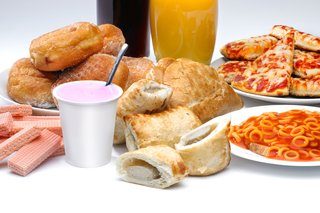
Studies have shown that consumption of soda, breakfast cereal and frozen foods could be more closely linked with long term cognitive decline.
This is according to research that debuted/unveiled during the Alzheimer’s Association International Conference this week in San Diego.
The not-yet-peer-reviewed study, which looked at 10,775 people in Brazil over 8 years, found an association between high consumption of ultra-processed foods and cognitive decline, especially memory and executive function. Natalia Goncalves, PhD, with the University of Sao Paulo Medical School, presented the findings.
“High consumption” in the study was classified as more than 20% of daily caloric intake— meaning 400 calories for an active woman, whose recommended daily calorie intake is 2,000, or 500 calories for an active man, whose recommended daily calorie intake is 2,500.
While these findings may not cause a massive sea change in the advice offered to Alzheimer’s disease and dementia patients on nutrition, it affirms already-existing knowledge: What’s good for the heart is good for the brain.
“We know that a healthy diet, a heart-healthy diet full of fruits and vegetables, we know that it is protective in many ways,” said Dr. Jean Guan, a geriatrician with CoxHealth.
“It’s exciting when our nutrition studies align with what we know as common sense,” said Lynetta Smith, a clinical dietitian with Citizens Memorial Healthcare in Bolivar.
The Alzheimer’s Association offers a course called “Health Living for Your Brain and Body” and Sarah Lovegreen, VP of programs for the Alzheimer’s Association, said the researched reinforced what was already taught in the class.
“This particular study adds to the growing amount of work we can do on what we advise in healthy living and risk reduction,” she said. “Those are terms we starting to use a little more as we learn more and in this space we can really talk about risk reduction.”
Something Smith emphasized was the importance of looking at the food we eat as a “dietary pattern” — what foods and drinks we consume, and the habits around them.
Dietary patterns low in processed food, like Dietary Approaches to Stop Hypertension (DASH) and the Mediterranean diet, are already common recommendations for people looking to preserve their brain health.
“There’s a beautiful synergy in our foods, and when we look at dietary patterns that have particular cognitive benefit, they’re ones that have also had a lot of research for cardiovascular benefits,” Smith said.
There are also benefits to less processed food beyond its nutrition.
“As people take time to prepare healthy meals at home, it’s a cognitive activity: You have to come up with meal plans, you have to think about your ingredients and measuring and preparing them in a way that uses them well, so you’re using your budget well,” Smith said. “Often with meal preparation, you’re working with others so you get that social factor that goes into our brain health.”
The study was interesting to Mark Applegate, an Alzheimer’s Association volunteer whose mother has Alzheimer’s disease. Since the condition runs in his family, Applegate has participated in clinical studies as well as improved his own health in an effort to mitigate his risk factors.
“I kind of wondered about (processed food impacting cognition), intuitively, because to me, the way you figure out what’s causing the boom in Alzheimer’s is to find things that have changed from now to when I was a kid, maybe 20, 30 years ago, or even longer, 40, 50 years ago,” Applegate said.
Access to healthy food difficult for some
For some, food deserts or a low income may mean that ultra-processed foods are their only option, further putting them at risk for developing dementias.
According to the Alzheimer’s Association, 19% of Black and 14% of Hispanic adults ages 65 and older have Alzheimer’s dementia, compared to 10% of white older adults. Research suggests that the large differences in risk are due to disparities in health and socioeconomic factors.
“The individuals who are at greatest risk are those who have the least ability to have access to those foods, whether they cannot purchase them, they cannot properly prepare them due to their home environment, or due to physical or mental disability,” Smith said. “Preparing foods, making a menu plan, that’s not easy for everyone. We’ve got a lot on our plates.”
When fresh produce isn’t available, frozen produce can be just as good, according to Lovegreen.
More: This Missouri State student wants to change healthcare: ‘Your ZIP code shouldn’t determine your health’
Guan emphasized that frozen food doesn’t have to be bad, necessarily: “You can prepare a huge portion of heart healthy foods and freeze it away. It’s still a frozen food they can microwave, but it’s not a processed frozen food.”
She also offered a price-conscious option for those looking to get the most bang for their buck.
“One thing I always recommend is lentils, because they’re very, very high in protein, very nutritious, super cheap and you can make a huge batch of lentils and freeze them away,” Guan said. “And as long as you don’t mind eating lentils, it’s a nice kind of healthy alternative for patients who may be strapped for cash or have difficulty accessing healthy food.”
Meanwhile, a new research has also revealed how ultra -processed foods can cause a significant decrease in brain function.
Research presented Monday at the Alzheimer’s Association International Conference in San Diego outlined how foods such as instant noodles, sugary drinks and frozen meals all play a factor in a faster rate of cognitive decline.
“It’s no secret that physical and mental-cognitive health are intimately involved with each other, so it’s no surprise that this latest research suggests brain impairment, too,” said Rafael Perez-Escamilla, a professor of public health at Yale University.
“Just 100 calories of processed foods can affect your physical health. So, that’s two cookies.”
Processed foods are not just microwave meals and ready meals.
A processed food is any food that has been altered in some way during preparation.
Food processing can be as basic as:
freezing
canning
baking
drying
Not all processed foods are unhealthy but some processed foods may contain high levels of salt, sugar and fat.
What counts as processed food?
Examples of common processed foods include:
breakfast cereals
cheese
tinned vegetables
bread
savoury snacks, such as crisps, sausage rolls, pies and pasties
meat products, such as bacon, sausage, ham, salami and paté
microwave meals or ready meals
cakes and biscuits
drinks, such as milk or soft drinks
Not all processed food is a bad choice. Some foods need processing to make them safe, such as milk, which needs to be pasteurised to remove harmful bacteria.
Other foods need processing to make them suitable for use, such as pressing seeds to make oil.
What makes some processed foods less healthy?
Ingredients such as salt, sugar and fat are sometimes added to processed foods to make their flavour more appealing and to extend their shelf life, or in some cases to contribute to the food’s structure, such as salt in bread or sugar in cakes.
Buying processed foods can lead to people eating more than the recommended amounts of sugar, salt and fat as they may not be aware of how much has been added to the food they are buying and eating.
These foods can also be higher in calories due to the high amounts of added sugar or fat in them. Find out more about calories.
How can I eat processed foods as part of a healthy diet?
You have no control over the amount of salt, sugar and fat in processed food but you do have control over what you to choose to buy.
Reading nutrition labels can help you choose between processed products and keep a check on fat, salt and sugar content.
Most pre-packed foods have the nutrition information on the front, back or side of the packaging.
If the processed food you want to buy has a nutrition label that uses colour-coding, you will often find a mixture of red, amber and green.
When you’re choosing between similar products, try to go for more greens and ambers, and fewer reds, if you want to make a healthier choice.
There are guidelines to tell you if a food is high or low in fat, saturated fat, salt or sugar.
The guidelines, which are for adults, are:
Total fat
High: more than 17.5g of fat per 100g
Low: 3g of fat or less per 100g
Saturated fat
High: more than 5g of saturated fat per 100g
Low: 1.5g of saturated fat or less per 100g
Sugars
High: more than 22.5g of total sugars per 100g
Low: 5g of total sugars or less per 100g
Salt
High: more than 1.5g of salt per 100g (or 0.6g sodium)
Low: 0.3g of salt or less per 100g (or 0.1g sodium)
If you are trying to cut down on saturated fat, try to limit the amount of foods you eat that have more than 5g of saturated fat per 100g.
Red and processed meat can be high in saturated fat. We are advised not to eat more than 70g a day.
With Additional Reports From Spring Field News Leader