
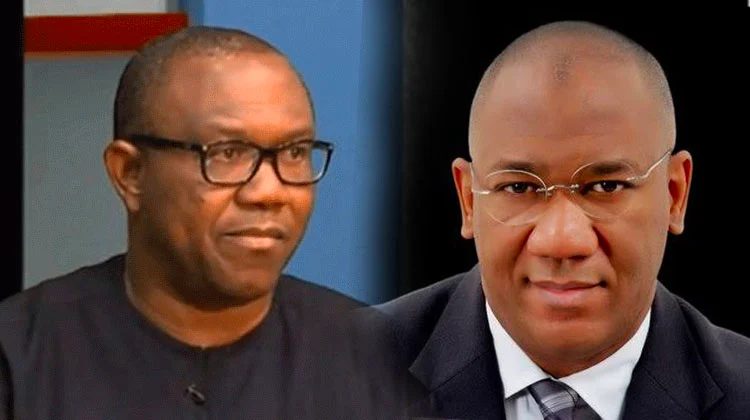
The drums have been rolled out, and the political campaigns have officially begun. The die is cast and the three major presidential contenders are at each others jugular.
Given the frenzy and the tension leading to the build-up of the election come February next year, many are of the opinion that this election will either mar or make the country. Most political pundits see it as the decisive factor on whether Nigeria will continue to remain one indivisible nation or be fragmented into tiny different parts. Quoting ,” SBM Intelligence analyst Ikemesit Effiong “The 2023 general election will be a really difficult but seminal point in Nigeria’s evolving experiment with democracy,” “It has the hallmarks of ending well or ending really badly.”
With Nigeria’s economy in tatters owing to insecurity, hyper- inflation, corruption and plunging oil revenue, the four major presidential hopefuls kicked off their campaign Wednesday on these four planks with a promise to right all that has gone wrong with the nation and its economy.
After two terms, Buhari steps down with Nigeria battling high inflation, oil production at record lows and security forces battling jihadists, separatist gunmen and criminal gangs across the country.
Of the top candidates lining up to clinch the presidency are Bola Tinubu, a former Lagos governor and stalwart of the ruling All Progressives Congress or APC and opposition Peoples Democratic Party or PDP candidate Atiku Abubakar, a former vice president on his sixth bid.
Two other candidates are challenging the dominance of the APC and PDP: Peter Obi, a former state governor generating a following among young Nigerians and another ex-state governor and former minister Rabiu Kwankwaso.
But with the election just five months away; and as the campaign hots up, there is an increasing number of party infighting such that many are worried that ethnic/religious divides might play a role in the coming election.
With a third party candidates to tap into growing anti-establishment feeling in what analysts see as a highly competitive electoral race, it is unclear how the election will turn out.
“Strong anti-establishment sentiment will lend opposition candidates Atiku and Obi strong momentum at the start,” Eurasia Group said in a research note.
“But divisions among the opposition, incumbency advantages for the ruling party and strong campaign messaging by Tinubu will likely give the ruling party a boost.”
PDP’s team says Abubakar has the public office experience and the business acumen to tackle Nigeria’s economy.
But the PDP is struggling with a major split. Abubakar’s victory has upset a core part of southern supporters, including Rivers State governor Nyesom Wike, an influential PDP stakeholder who has broken ranks.
PDP and APC “are dealing with quasi existential issues of their own, and important political and vote mobilisation blocks which are disaffected,” SBM Intelligence analyst Ikemesit Effiong said.
Obi’s campaign hopes their candidate can keep up his early momentum as an alternative. But his Labour Party does not have the political structure to match the APC and PDP nationwide, critics say; even as results of the Bloomberg Polls on who to succeed Muhammadu Buhari come next year reveals that majority of those questioned named Obi as their preferred choice of candidate for the presidency.
Of the 92% of participants who said they’ve decided to vote, 72% named Obi as their first choice. Of those who are still unsure, 45% said the 61-year-old is their preferred candidate.
The San Francisco-headquartered data company surveyed 3,973 Nigerians from Sept. 5-20. Respondents representation. About 44% of Nigerians own smartphones, according to the Alliance for Affordable Internet.
The candidates of the two parties that have ruled Nigeria since the restoration of democracy in 1999 fared less well. Bola Tinubu of the ruling All Progressives Congress garnered 16% of decided voters and 23% of those yet to make up their minds. Atiku Abubakar of the main opposition Peoples Democratic Party tallied 9% and 17% respectively.
A former two-term governor of the southeastern Anambra state, Obi is running on the ticket of the Labour Party, which won a single seat in the Senate and House of Representatives in the last election in 2019. The APC and PDP dominate both chambers of parliament.
It is , however, not clear who will become the president of one of the most populous country in West Africa. One thing is sure: devoid of violence, everything will depend on how the electoral umpire, the Independent National Electoral Commission, INEC, decides to conduct itself in ensuring that there is a free and fair election in Nigeria come February next year.
This will be a nice way not just for President Buhari whose seven and half year tenure has been roundly criticized by many; but also for the INEC chairman, Muhammad Jega to end their tenure on a good note.
As the election date draws near, Nigerians and the rest of the world are waiting with bated breath at the outcome. How it all pans out remains to be seen.
With additional reports from AFP and Bloomberg News