
By Fiscal Posts
Nigeria is battling a worsening humanitarian and security crisis as the Boko Haram insurgency and related violence continue to ravage the North-East. Over 2.2 million Nigerians are now internally displaced, while an estimated 35,000 have been killed since the insurgency began in 2009, according to UN and government data.
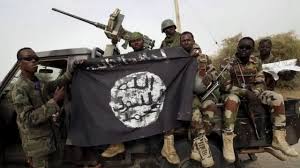
Recent weeks have seen fresh escalations. In Kirawa, Borno State, Boko Haram fighters seized the border town, razing a military barracks, the District Head’s palace, and dozens of homes and shops. More than 5,000 residents fled into neighbouring Cameroon to escape the onslaught. In a separate assault, insurgents attacked an army base in Borno, killing four soldiers and destroying military equipment, even as troops repelled another coordinated strike in Banki.
Retired Chief of Defence Staff General Lucky Irabor, a former Chief of Defence Staff under the late Muhammadu Buhari’s administration,” in his new book, ‘Scars: Nigeria’s Journey and the Boko Haram conundrum’, reportedly renewed calls for a state of emergency in response to insecurity, urging the National Assembly to back the move. He believes Nigeria lacks the political will and a coordinated strategy to fully confront Boko Haram, and that only emergency powers can bring together all national resources effectively. “The government has not yet mustered the political will and instruments to declare war against Boko Haram”, Irabor reportedly said.
Other retired senior officers, including Brigadier General Peter Aro, Major General Dayo Olukoju, and Colonel Saka Folusho, have also supported this idea. They emphasize the need for a unified command, proper logistics, and clear accountability. Some security experts have lent their voices to the insecurity crisis in the country, blaming it on corruption, unchecked illicit arms possession among others.
A security expert, Mr. Sam Otoboeze, reportedly attributed the rising insecurity in the country to several factors including the erosion of family values. Otoboeze spoke in Nsukka, recently, while delivering a paper titled: Securing the future: Enhancing peace, trust, and development of Nsukka cultural zone. He was guest speaker at the event which has the theme: No Security, No Development – Together We Build Both.
The Northern Elders Forum has also called for emergency action in the states most affected, including Borno, Zamfara, Katsina, Niger, and Benue. They warn that the level of violence and displacement now threatens the stability of the entire country.
Economically, the cost of the crisis is staggering. The Presidential Economic Advisory Council once estimated that insecurity-related losses amount to US$10.3 billion annually, equivalent to approximately 2.6% of GDP. Between 2007 and 2019, Nigeria reportedly lost US$1.34 trillion to violence, while in Borno alone, destruction of infrastructure has topped ₦1.9 trillion (about US$5.2 billion). Homes, schools, hospitals, power and water facilities have all been decimated, setting back development across the region.
Fresh data from Sahara Reporters show that insecurity is worsening nationwide. In the first half of 2025, Nigeria recorded 6,800 fatalities — a 13.7% rise from late 2024 — and 5,402 abductions, up 30% from early 2024. Zamfara State remains the epicentre, with 1,088 deaths and 1,755 kidnappings in six months. Between January and March 2025 alone, over 2,000 people were killed in violent incidents, including 136 security personnel.
The numbers show a grim reality: instead of improving, Nigeria’s insecurity is growing in both scale and complexity. Analysts warn that without strong political will, better military coordination, and action to address root causes like poverty, poor governance, and the spread of weapons, the country could face even more instability and greater human and economic losses.