
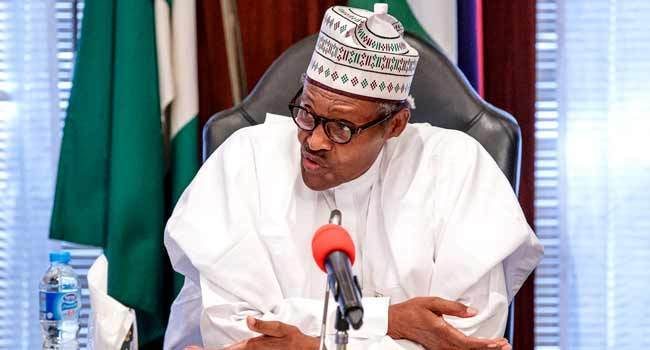
The Debt Management Office, DMO, has finally criticized the out-going government of President Muhammadu Buhari for its unbridled penchant for borrowing despite having less than a few weeks more in office, before handing over to a new government on May 29.
The Budget Office of the Federation does not appear to be alone in its views concerning the unrestrained borrowing of Buhari’s government. The World Bank, International Monetary Bank, and economic experts have also expressed their displeasure.
The DMO worries that the country’s debt figure was hovering around N80trillion. According to the Debt Management Office, as of the Fourth Quarter of 2022, the total debt stock is N46.64 trillion, excluding the Central Bank of Nigeria’s Ways and Means loan to the federal government of N22.7 trillion, which the National Assembly recently approved.
Thereafter the country’s debt shot up to N80trillion, from January till date.
When the Buhari’s administration took over office in 2015, Nigeria’s debt profile was N12.6 trillion but has since risen to over N80 trillion in 2023.
Despite calls from stakeholders for the current government to suspend the $800 million subsidy palliative loan from the World Bank, Buhari still wrote to the National Assembly on Wednesday to consider approving the loan request.
During the last National Economic Council meeting, the Minister of Finance, Budget and National Planning, Zainab Ahmed, hinted at the suspension of fuel subsidies removal.
Despite the mixed reactions about the move, it did not last as Ahmed made a U-turn, noting that fuel subsidy removal was not suspended; instead, the discussion was extended to allow the incoming government to take the front seat.
On the ratio of Nigeria’s debt to revenue, the World Bank disclosed that the Country spent 96.3 per cent of its revenue for 2022 on debt servicing.
Although the Finance Minister, Ahmed, said the figure is 80.6 per cent, this can be, it is a pain for the Country. By implication, the situation would affect the economic well-being of Nigeria because it would lessen investment in infrastructure, human capital and other laudable enterprises.
Meanwhile, Wenjie Chen, deputy divisional chief of the International Monetary Fund (IMF), speaking recently at a function in Lagos, warned Nigeria against placing its 2023 budget sustenance on foreign loans.
According to him, the rising interest rates and uncertainties within the global market would make it hard for the Country to get foreign loans.
No wonder the Director General of the Budget Office, Ben Akabueze, said trouble is imminent while reacting to the Nation’s debt figure.
Abakueze addressing members-elect of the 10th National Assembly at their week-long induction ceremony in Abuja on Wednesday pointed out that while Nigeria remains healthy with its debt-to-GDP ratio, the Country is not with its debt-to-revenue ratio.
“Even on the African continent, the spending ratio is about 20 per cent. South Africa is about 30 per cent; Morocco is about 40 per cent. And at 15 per cent, that is too small for our needs. That is why there is fierce competition for the limited resources.
“That can determine how much we can relatively borrow. We now have minimal borrowing space, not because our debt to GDP is high, but because our revenue needs to be more significant to sustain the size of our debt. That explains our high debt service ratio. Once a country’s debt service ratio exceeds 30 per cent, that Country is in trouble, and we are pushing towards 100 per cent, and that tells you how much trouble we are in”, he said.
With aditional reports from Daily Post