
By Our reporter
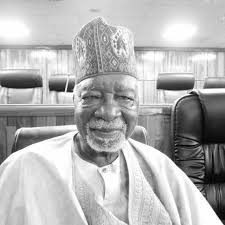
Retired Major-General Ibrahim Bata Malgwi Haruna has urged President Bola Tinubu to prioritise the creation of a political and security atmosphere conducive to a credible 2027 general election, warning that Nigeria’s fragile democracy cannot survive another flawed transition.
Speaking as an elder statesman, in an interview with the Vanguard, Haruna said the government must consciously protect the electoral space, empower credible institutions and ensure that insecurity does not undermine voters’ confidence or participation.
According to the former Federal Commissioner for Information and Culture, the president’s most important responsibility ahead of 2027 is not partisan politics but guaranteeing an environment where elections are seen as free, fair and acceptable to Nigerians. He stressed that democratic gains, though modest, must be preserved through transparency, institutional credibility and restraint by those in power.
Haruna also weighed in on Nigeria’s worsening security challenges, arguing that the country has never been completely secure, but that modern communication now exposes every incident instantly. He cautioned that insecurity should not become an excuse for external dependence or the erosion of sovereignty, noting that many of today’s armed groups are products of long-standing political and socio-economic failures.
Against this backdrop, he referenced the recent U.S. bombing ordered by President Donald Trump against a terrorist organisation in Sokoto, questioning both its real impact and underlying intention. Haruna described the strike as an “investment of power,” suggesting it was less about Nigeria’s security and more about future strategic and economic interests, insisting that foreign military help is never free.
He argued that while such strikes may appear decisive, they rarely address the root causes of terrorism or significantly alter the security landscape. Instead, he said Nigeria must confront how political manipulation, joblessness and failed policies have helped create and sustain armed groups now labelled as bandits or terrorists.
Reflecting on Nigeria’s history, Haruna linked today’s challenges to unresolved structural and political tensions dating back to independence and the 1966 coup, which he described as inevitable under the conditions of that era. He maintained that only a functioning democracy, anchored on credible elections, can prevent a relapse into authoritarianism or deeper national fracture.
As the countdown to 2027 begins, Haruna said Nigerians’ hope rests on leadership that can rise above fear, foreign pressure and internal divisions. “The test,” he implied, “is whether we can secure our democracy ourselves — starting with an election Nigerians can truly believe in.”