
By Mary Onyia
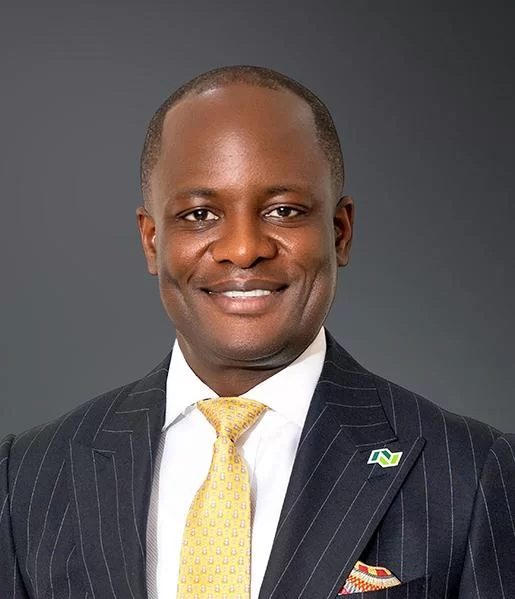
The Group Managing Director and Chief Executive Officer of Nigerian Exchange Group (NGX) Plc, Temi Popoola, has stated that Nigeria’s capital market should evolve beyond wealth generation to promoting prosperity that is inclusive, sustainable and anchored on strong governance.
Speaking at the 2026 Nairametrics Capital Market Awards in Lagos at the weekend, Popoola said the long-term strength of the Nigerian economy would be determined not only by its capacity to create wealth but also by how such wealth is generated, distributed and sustained.
Addressing regulators, investors, market operators and business leaders, he described the capital market as a vital channel for directing capital into productive sectors, fostering innovation, creating employment opportunities and supporting long-term economic growth.
“When we talk about wealth creation, the question is no longer whether wealth can be created. The more important question is how it is created, who participates in it, and what impact it leaves behind,” he said.
Popoola observed that global investors are increasingly allocating capital to markets that exhibit transparency, resilience and sound governance.
“In this environment, potential is not enough. What attracts capital is confidence in institutions, governance and market integrity”, he stated.
According to him, responsible wealth creation demands a move away from short-term gains towards sustainable value creation, with businesses, investors and regulators embracing accountability, transparency and long-term planning.
He further emphasised inclusion, noting that the full benefits of market development can only be realised when investment opportunities are available to a broader segment of society.
“A strong capital market is one that broadens access and participation across geography, gender, age and background. Wealth creation only becomes meaningful when it is widely accessible”, he said.
Popoola identified growing retail investor participation as one of the most encouraging developments in the market, attributing it to improved financial literacy and advances in digital innovation.
He pointed to the success of NGX Invest, the Exchange’s digital platform for primary market offerings, which played a significant role during the banking sector recapitalisation exercise.
According to him, the platform facilitated capital raises of more than N2.8tn while bringing over two million retail investors on board in 2025.
He added that sustainability is increasingly influencing investment decisions worldwide, with investors paying greater attention to governance standards, environmental sustainability and social impact in addition to financial performance.
Popoola expressed optimism about Nigeria’s long-term outlook, citing its youthful population, entrepreneurial culture and expanding innovation ecosystem.
He, however, stressed that these strengths must be complemented by stronger institutions, policy consistency and enhanced investor confidence.
“Capital markets have a critical role to play by mobilising long-term capital, supporting business expansion and connecting innovation with investment”, he said.
The awards recognised outstanding performers across Nigeria’s capital market ecosystem. MTN Nigeria Plc emerged as Company of the Year and also won Utilities & Infrastructure Company of the Year, while Zenith Bank was named Tier-One Bank of the Year (FUGAZ), and Wema Bank won Commercial Bank of the Year.
Other notable winners included Seplat Energy Plc, which secured both Energy Company of the Year and Dividend Paying Company of the Year; AIICO Insurance Plc as Insurance Company of the Year; Guinness Nigeria Plc as Consumer Goods Company of the Year; Lafarge Africa Plc as Industrial Goods Company of the Year; and Transcorp Group as Diversified Company of the Year.
The Nigerian Exchange Limited won Exchange of the Year, while the Securities and Exchange Commission received the Market Reforms Initiative of the Year award. The Nairametrics Capital Market Award was presented to PENCOM in recognition of its contribution to the development of Nigeria’s capital market.