
By Felix Olukayode
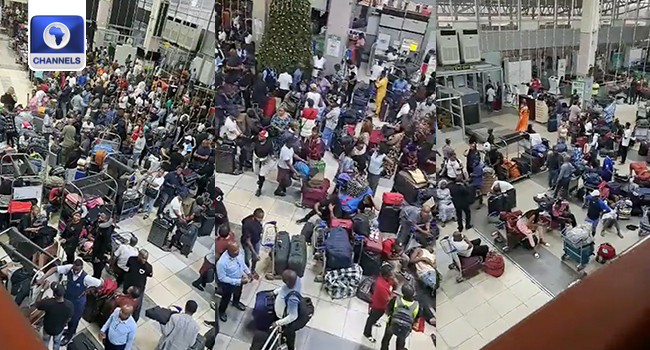
Nigeria’s worsening security challenges and the poor state of major highways appear to be driving more citizens to air travel, as the Federal Airports Authority of Nigeria (FAAN) reported that domestic passenger traffic rose to 13.09 million in 2025, up from 12.54 million in 2024, representing a 4.33 per cent increase. The figures, contained in FAAN’s 2025 Passenger Traffic Analysis Report, show that domestic air travel now accounts for nearly 73 per cent of all passenger movements across the nation’s airports.
The increase comes amid renewed terrorist attacks and kidnappings across several parts of the country.
A FAAN official notes strong demand on key routes but cites high fares and disruptions suppressing overall numbers. Analysts say insecurity is shifting who flies, not expanding the market, as families and professionals opt for air travel over risky or costly road trips.
Mr. Bonny Okafor, a Lagos-based businessman and frequent traveler, mentioned that he flies often, not due to a passion for flying or financial ability, but because “flying for now is safest for me.”
This is especially evident during NYSC deployments, where parents incur high costs for safety.
Prospective corps members report emotional and financial stress, including fears of travel dangers and fare hikes.
Fola Oketumbi, a Computer Science graduate of the University of Nigeria, Nsukka, recently posted to Zamfara State for the National Youth Service Corps (NYSC), said she is anxious about travelling to the state amid growing security concerns.
“My parents want me redeployed to a state in the South-West, which is closer to home and generally considered safer, but I have been told I must first report to the orientation camp before any redeployment request can be processed,” she said.
Oketumbi noted that beyond the emotional stress, the financial burden is also significant. “Flying is now regarded as the safest way to travel, but the cost of airfare is an added strain on many families,” she added.
Experts say the government must urgently improve security and transport infrastructure across the country, stressing that while air travel may offer a safer alternative for many Nigerians, it remains an expensive coping mechanism rather than a lasting solution to the nation’s security and transportation challenges.