
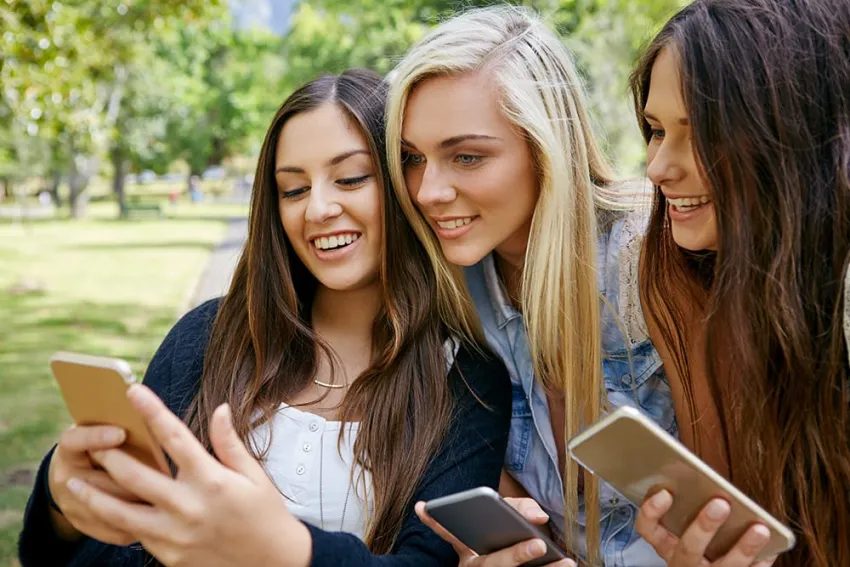
Telling kids to do as you say, not as you do, just doesn’t cut it anymore.
It’s not like every generation of high schoolers was a fountain of euphoria and contentment. I graduated in 2002, and we had our own batch of emo kids as we called them, who dyed their hair black, listened to Dashboard Confessional, and resented every aspect of life, including their curfew.
Yet it’s also understandable that being a teenager is a painful junction in life, where you feel the adult yearning to be free of rules and wander the Earth, while also attempting to fit in with a motley cohort of fellow teens.
The reality is that teenage sadness and loneliness have dramatically risen over the past two decades. Regardless of your race, ethnicity, or location — the numbers are up. And the reality is that the same factors impacting teen happiness are involved in our own wellbeing.
The backdrop
It isn’t all bad.
Misconduct isn’t actually a driving factor in this unhappiness. Drinking-and-driving is down 50% since the early 1990s, when we were seeing a scourge of fatal accidents with teens. Violent crimes and fighting at school have also dropped by 50%. Sex before age 13 is down 70% (which is a predictor of many other poor life outcomes).
There’s also more widespread acceptance of LGBTQ teens than has ever been recorded prior. In my high school in 2002, there wasn’t even “out” teenagers in our graduating class. Whereas, today, seemingly every graduating class has them. Which is a sign of progress.
Yet, there’s still widespread problems with anxiety and depression.
Part of it is basic biology. The hours spent sleeping have declined by 30% over the past decade. And if you want to know why, simply look across the bed at the person sitting next to you, playing on their phone.
Sports participation has dropped to all-time lows. Which is a deceptive figure, because among wealthy families — it’s at an all time high. Kids are put into traveling sports teams, and are fast-tracked to be athletes in college. But participation among middle and lower class families has plummeted. The access to training, equipment, and fields have vanished. And by the time these kids try out for the basketball team, the other kids have been playing in travel leagues for six years and they don’t stand a chance.
This feeds into a larger narrative of children not interacting with each other, which extends deeper into middle and high school. Kids are less likely to socialize outside of class, less likely to interact and go to the mall as my friends and I did as young teenagers. Even going on a date isn’t as common.
The pandemic deepened an epidemic of loneliness us all and the trend has extended well past it. Per Psychologist Dr. Laurence Steinberg, “Rising teenage sadness isn’t a new trend, but rather the acceleration and broadening of a trend that clearly started before the pandemic. We shouldn’t ignore the pandemic, either. The fact that COVID seems to have made teen mental health worse offers clues about what’s really driving the rise in sadness.”
And this feeds into a broader narrative of the world feeling more stressful and dangerous than ever before. News cycles are egregiously negative and addictive. Which is compounded by parents feeling they need to coddle kids and protect them from exposure to stressors. This leaves kids unable to cope with the stress when it inevitably arrives.
You already knew it: social media
It isn’t always bad. Social media is more like alcohol: able to enhance the socialization process but also leading to addiction, causing depression and anxiety.
For example, on the positive front, my friends and I often post a group photo on Facebook within a few days of a trip ending. Posting publicly feels like a fun declaration of our friendship, and a way of rekindling our bonds if we haven’t seen each other in a long time.
But it is in those quieter, boring moments where the problems come. Facebook becomes a pseudo-socialization that disrupts the normal restlessness that would cause you to call a friend, or go look for something to do with a peer. The act of scrolling the feed gives you a faux sense of activity and productivity that really isn’t helping the problem.
And this process is quite destructive for teenagers. Last year, researchers at the Wall Street Journal conducted a study and found that, “Thirty-two percent of teen girls said that when they felt bad about their bodies, Instagram made them feel worse.” Even worse, the girls said they felt addicted, and knew it was bad for them, but couldn’t stop using the app.
And, sadly, Instagram’s parent company, Facebook, knows this. They have said they know their app makes teen girls worse off for one in three. The problem is that Facebook doesn’t know how to easily unwind this — or more specifically, they haven’t been incentivized to.
Speaking as someone who makes their living in algorithms — I know well that the algorithms are just responding to user inputs. If an algorithm rewards beauty and allure, than you are more likely to be shown more of that in the feed. And if that’s all you see — its deceptively easy to think an Instagram super model is the normal standard for beauty. You forget the amount of image editing and tweaking that happens to attain these looks. You don’t see the 200 pictures someone took before finding the one good one with the right lighting and angle to post.
Per US Surgeon General, social media is invoking a midlife crisis in teenagers and our governments have failed them egregiously by not regulating it.
Where do we go from here
To be specific, social media tends to be most damaging to girls between ages 11 and 13 (which is also a core demographic for Keeping up with the Kardashians, I will note), and boys ages 14–15. Essentially, the key growth phases of puberty tend to be their most vulnerable points, and then at age 19, it hits us all equally.
I would implore parents reading this to regulate their teenagers use of social media and use it as a moment for self-reflection. Every time I go to a public place, like a mall, I marvel at how all teenage girls have a cell phone in their butt pocket or in their hand 24–7, seeming completely tethered to the device.
With adults, I notice that if there’s a line or waiting room, 95% of people are staring down at their phone like zombies.
We would all do well to practice time limits on our smart phone usage, and use of social media in general. Research shows that 61% of adults are addicted to their phones. A digital detox is shown to increase wellbeing and reduce anxiety.
According to Dr. Yalda Safai, “Per the study, conscious and controlled changes of daily time spent on smartphone use can contribute to subjective well-being — fewer depressive and anxiety symptoms, less problematic use tendencies, more life satisfaction.”
High school and college is typically the most social times for all adults. Yet now, teenagers, who have far more free-time than most of us, aren’t even meeting up with friends. It doesn’t bode well for their futures.
But we should all learn from this problem. The answer is very simple: we are responsible for staving off loneliness. Make the effort to go outside. Call the friend you haven’t seen in too long. If you are bored, don’t let your phone be the go-to solution.
And if you have teenagers, exercise some authority while you still can, and force them to stop using their phones so much. Then, make sure you are leading by example. Telling kids to do as you say, not as you do, just doesn’t cut it anymore.
Culled from Yahoo!Life