
By Our Reporter
The Nigerian Center for Disease Control and Prevention, NCDC, has announced an increase of about 3.5 per cent in the fatality rate of cholera which has spread across 32 states and 115 local government areas of the federation.
Giving a notification yesterday, the Deputy Director of Surveillance of the NCDC, and National Incident Manager for cholera at the Centre, Dr. Muntari Hassan, said a total 54 deaths and 1,579 suspected cases have been documented since the beginning of the year.
The agency had announced, Monday, that as of June 24, 2024, 53 deaths and 1,528 suspected cases of cholera across 31 states and 107 LGAs were recorded in Nigeria since the beginning of the year with a case fatality rate of 3.5 per cent.
“The current number of people that died is at 54 right now, it’s gone up from 53 and the total number of cases that we have today is 1,579 across 32 states of the Federation, covering 115 local government areas.
“The situation is getting worse in terms of when you look at the number and when you look at the deaths, you can say it is getting worse, but when you look at the total number of reported cases and suspected cases, in this week of 25, it has reduced from what it was in the week of 24, but we are still having cases across the country.
“The worst affected states are Lagos, Bayelsa, Abia, Katsina and about two others, are the six top states that I can say are the worst affected and are the ones with the highest number, but basically, the ones with the highest numbers are Lagos and Bayelsa states.
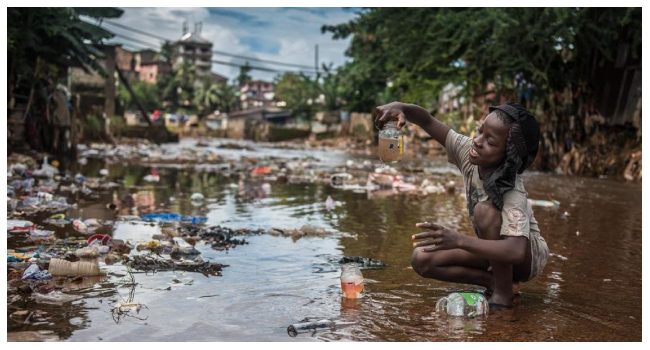
“It is a multi-factorial; one can’t single out just one problem. Like for example, we may have potable drinking water, but somebody is defecating In the open and he has cholera, so essentially a change of attitude and habits of people, what we need to do ourselves then we can look for support from government. It requires education and that is why we have developed some jingles,” Hassan explained.
Following the rainy season, a period known to have a high risk for increased cholera transmission; and given that Nigeria is seen as a cholera endemic country, the NCDC started its Emergency Operation Centre, EOC, nationally in order to create a central response system.
He said: “We have been having sporadic cases all through, but when cases rise or we have an upsurge in cases, then there is a concern, which prompted us to conduct what we call dynamic risk assessment.
‘’We rank Nigeria as high risk, then there is a need for us to have a coordinated structure where we can have a multi-disciplinary, multi-sectoral response to any of the epidemic diseases, not only cholera.
“So the Director-General of the NCDC, Dr Jide Idris, inaugurated an Emergency Operations Centre yesterday and appointed an incident manager for the response. The essence of this is to have a well-coordinated response.
“The Emergency Operations Centre comprises the NCDC, the other ministries, departments and agencies like the Federal Ministry of Health, Federal Ministry of Environment, Federal Ministry of Water Resources, WHO, UNICEF, MSF, among a host of others. This response is multi-sectoral.”.
Meanwhile, the Federal Government, Wednesday, in Abuja, confirmed that it has begun discussions with the Global Alliance for Vaccines and Immunisation, GAVI, for emergency supplies of oral cholera vaccine, OCV, in view of shortage of vaccines in the country.
Director-General of the Nigeria Centre for Disease Control and Prevention, NCDC, Dr Jide Idris, who disclosed this in Abuja, said the Coordinating Minister of Health and Social Welfare, Prof. Muhammad Ali Pate, is leading the discussions with GAVI.