
By Mary Onyia
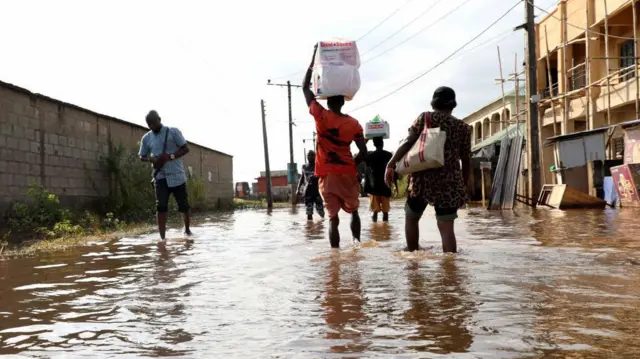
The Nigeria Hydrological Services Agency (NiHSA) has raised fresh concerns over the safety of drinking water in Lagos and other flood-affected states, warning that prolonged flooding may have contaminated boreholes, wells, and other household water sources, exposing millions of Nigerians to the risk of deadly waterborne diseases.
The Director-General of NiHSA, Umar Mohammed, reportedly said that the agency is preparing to conduct post-flood water quality assessments after weeks of persistent flooding left many communities submerged.
According to him, NiHSA had anticipated the danger long before the rains began by collecting and testing water samples from boreholes and community water sources across vulnerable areas. The exercise, he explained, was designed to establish baseline data that would allow experts to determine the extent of contamination after flooding.
“So we can get to confirm what is polluting the water,” Mohammed said.
He warned that stagnant floodwaters, particularly in low-lying areas of Lagos where drainage has been slow, often become contaminated with sewage, industrial waste, refuse, and other harmful pollutants. As the water remains trapped for days or even weeks, these contaminants can seep into underground water sources relied upon by millions of households.
The agency fears that residents who consume untreated water from shallow wells and boreholes could face increased exposure to diseases such as cholera, typhoid fever, dysentery, and other serious gastrointestinal infections.
Mohammed noted that the situation is especially worrying because many of the affected communities lie at or below sea level, preventing floodwaters from receding quickly and allowing contamination to persist much longer than normal.
NiHSA has already projected that flooding will continue intermittently across many parts of Nigeria until September, with August and September expected to record the heaviest flooding.
A Silent Health Emergency
While the destruction of homes, roads, and businesses has dominated public attention, experts say the contamination of drinking water could prove to be the flood season’s most dangerous and long-lasting consequence.
In a country where millions of households depend on privately owned boreholes and shallow wells due to limited public water supply, polluted groundwater could trigger widespread outbreaks of preventable diseases if urgent precautions are not taken.
The danger is particularly acute because contaminated water is often clear and odourless, making it difficult for residents to detect without proper laboratory testing.
What the Government Must Do
To prevent a major public health crisis, authorities at all levels are being urged to act swiftly by:
- Conducting emergency water quality testing in flood-affected communities and making the findings public.
- Providing safe drinking water through water tankers and temporary supply points where contamination is confirmed.
- Distributing water purification tablets, chlorine solutions, and hygiene kits to vulnerable households.
- Intensifying public awareness campaigns on safe water handling, sanitation, and disease prevention.
- Pre-positioning cholera, typhoid, and other emergency medical supplies in high-risk local government areas.
- Clearing blocked drainage channels and accelerating floodwater evacuation to reduce prolonged contamination.
- Strengthening coordination among federal, state, and local agencies to ensure early flood warnings translate into timely action.
What Nigerians Should Do
Residents living in flood-prone areas are advised to take extra precautions to protect their families by:
- Boil drinking and cooking water for several minutes before use.
- Use approved water purification tablets or chlorine treatment where available.
- Avoid consuming water from flooded wells until authorities certify it sis afe.
- Properly covering boreholes and water storage containers to prevent contamination.
- Washing hands regularly with clean water and soap, especially before eating and after using the toilet.
- Seeking immediate medical attention if symptoms such as persistent diarrhoea, vomiting, fever, or s,evere stomach pain develop.
- Reporting suspected cholera or typhoid cases promptly to the nearest health facility.
A Race Against Time
With heavy rains expected to continue over the coming months, health experts warn that Nigeria’s greatest flood challenge may extend beyond submerged homes and damaged infrastructure.
Unless governments respond quickly and residents take preventive measures seriously, the floodwaters receding from streets today could leave behind an even deadlier crisis—contaminated drinking water capable of fuelling disease outbreaks long after the rains have stopped.
With reports from the Vanguard