
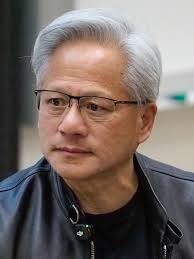
….. Board begins search for permanent successor as departure of the chipmaker’s co-founder sends shockwaves through the global artificial intelligence industry.
By Our Correspondent
Jensen Huang, co-founder and long-serving chief executive officer of Nvidia, has resigned from the $4 trillion artificial intelligence chipmaker, bringing an abrupt end to his 33-year leadership of the company.
Nvidia announced his resignation on Thursday, November 12, 2026, saying it took immediate effect. Huang also stepped down as a member of the company’s board of directors. His departure follows a turbulent week during which reports of two extramarital relationships, including one involving a woman suspected by US intelligence officials of having links to Chinese espionage, triggered a major crisis for the technology giant.
The company’s board appointed its executive vice-president and chief financial officer, Colette Kress, as interim CEO, pending the appointment of a substantive successor. Kress, 59, joined Nvidia in September 2013 and has overseen its financial operations during a period of extraordinary expansion, as the company became the world’s leading supplier of advanced chips powering artificial intelligence systems. Before joining Nvidia, she held senior finance positions at Microsoft, Cisco and Texas Instruments, bringing nearly 25 years of experience in the technology industry.
Kress is not, however, the confirmed permanent replacement. Nvidia’s board has begun a search for a substantive CEO and is considering both internal and external candidates. According to Reuters, names being discussed include Lan Buck, a senior Nvidia executive who helped develop the company’s CUDA software platform, Lisa Su, chief executive of rival chipmaker AMD, and Rene Haas, head of British semiconductor design company Arm. These are potential candidates reported in industry discussions, not appointments announced by Nvidia.
Huang’s resignation follows revelations about alleged relationships with two women, including Alice Huang, whom US intelligence officials reportedly suspect of having links to China’s Ministry of State Security, and Kimberly Powell, an Nvidia vice-president of healthcare. The allegations have raised national-security and corporate-governance concerns, particularly over the possibility of sensitive technology information reaching China. Nvidia’s board had already commissioned an independent investigation, although it said it had no reason to believe that national security or company secrets had been compromised. China has denied the spying allegations.
The departure presents a significant leadership challenge for Nvidia, whose rise to become the world’s most valuable publicly traded company has been closely associated with Huang’s vision and aggressive investment in artificial intelligence.
The company has appointed veteran director Harvey C. Jones as its first-ever board chairman to oversee the transition. Meanwhile, Kress faces the task of maintaining investor confidence, protecting Nvidia’s relationships with customers and suppliers, and sustaining its dominance in the rapidly expanding AI chip market. Her appointment is therefore an interim stabilisation measure, while the search for Huang’s permanent successor continues.