
The public health expert said that the older, less educated and those of lower social economic status were less likely to adhere to COVID-19 implemented preventive measures.
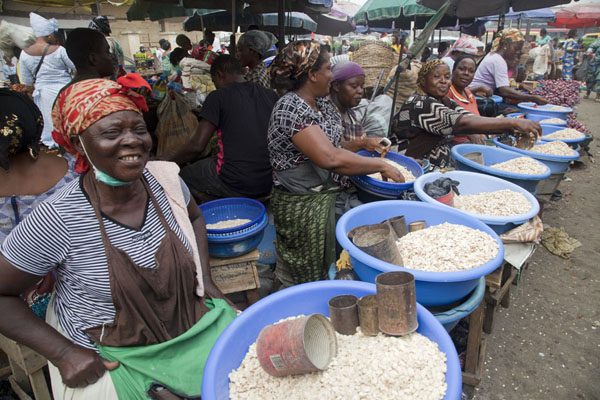
Nigerian market women are a high risk group that could drive community transmission of COVID-19 infections, says Dr Olubunmi Olopha, a top executive at the Nigeria Center for Disease Control (NCDC).
Ms Olopha, NCDC’s assistant director of Prevention Programmes and Knowledge Management, said this in an interview with NAN on Thursday in Abuja.
The public health expert said that the older, less educated and those of lower social economic status were less likely to adhere to COVID-19 implemented preventive measures.
“Low educational background among market women, who are older, might limit their exposure to information on recommended preventive measures for COVID-19.
“Subsequently, leading to low-risk perception; coupled with increased rate of misinformation and misconception among market women.
“The cost of hand sanitisers and face masks, which rose sporadically in response to the economic laws of demand and supply; coupled with the economic costs of adhering to the other preventive measures might have been a contributing factor to the low adherence among the market women.
“Also, their earnings, which were drastically affected by the economic downturn, as a result of the lockdown, also contributed to their non-adherence,” she explained.
Ms Olopha said within the context of a fragile health system and the spread of misinformation concerning COVID-19, it was important to understand how the populations, with limited access to health services and information perceived the issues, particularly the appropriate responses required of them.
She stated that marketplaces happened to be public places where the measures to curtail the spread of COVID-19 appeared difficult to be complied with or challenging to implement.
Healthcare systems in low and middle-income countries, like Nigeria, have had these challenges in addressing the COVID-19 pandemic, she said.
“Notably, market women in Nigeria are considered as providers of essential services and thus were permitted to trade foodstuff during the lockdown, in response to community transmission of COVID-19 in Nigeria.
“With the resumption of normal activities in many nations of the world, including Nigeria, and considering the fear of subsequent waves of the pandemic.
“Rising cases and deaths in Africa. New and fast spreading variants such as Beta, Delta variants; and evidence suggests that for preventive measures to be effective, public adherence is essential,” she explained.
Ms Olopha recommended that concerted efforts be given to public enlightenment on the risks of non-compliance and governments at all levels should also consider enforcement of compliance with recommended COVID-19 preventive measures.
She added that this should be particularly among market women, who could be drivers of community transmission of COVID-19 infection, due to their low adherence.
Nigeria is in her third wave of COVID-19 pandemic with number of infections resurging after months of lull. At least a dozen of persons infected with the fast-spreading Delta variant.
With the arrival of another shipment of vaccines, the second stream of mass inoculation of citizens will soon begin, per assurances from health authorities.
(NAN)