
By Our Reporter
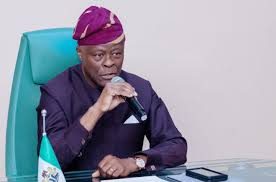
The Minister of Finance and Coordinating Minister of the Economy, Wale Edun, Wednesday, cleared the air on why president Tinubu decided to remove fuel subsidy, even as he revealed that the country spends a whopping $600 million per month on fuel imports.
The Minister speaking during an interview on the African International Television, AIT, also debunked reports that the federal government secretly approached the Central Bank of Nigeria (CBN) for Ways and Means advances, insisting there was no such thing.
He attributed the humongous expenditure on petrol to the fact that neighbouring countries, extending as far as Central Africa, are benefiting from Nigeria’s fuel imports, stressing that it was one of the main reasons why the president had to remove the fuel subsidy to cut back on foreign exchange expenses.
According to him, it was imperative for the government to tackle this issue with utmost vigour, given its importance to the country’s economic stability and growth.
He, however, regretted that the task is being made harder owing to the lack of accurate data on the nation’s internal fuel consumption, which complicates efforts to manage the situation effectively.
He emphasised that the government’s top priority was the welfare of its citizens, particularly the vulnerable.
Edun added that ensuring the availability and affordability of food was a key focus area for the incumbent administration.
The Minister also clarified that the N570 billion fund allocated to state governments was initiated in December of the previous year.
He said: “The fuel subsidy was removed on May 29, 2023, by Mr. President.
“At that time, the poorest 40 percent of the population was receiving only four percent of the subsidy value. Essentially, they were not benefiting at all. It was benefiting only a few.”
He continued: “Another important point is that nobody knows the exact petroleum consumption in Nigeria. We know we spend $600 million to import fuel every month, but the issue is that all neighboring countries are benefiting. We are not just buying for Nigeria; we are buying for countries to the east, almost as far as Central Africa, as well as for countries to the north and west. We must ask ourselves, as Nigerians, how long we want to continue this.”
Edun also discussed the government’s efforts to mitigate inflation and stabilise the economy by ensuring the availability of homegrown food. He reassured that this approach would not harm local farmers, as imports would only be permitted once local supplies are fully depleted.
“In the short term, apart from what is being distributed from reserves, there is a window opened for importation,” he explained. “The President’s commitment is to drive down prices and make food available immediately. One of the conditions for this importation is that all locally available food in the markets or with millers must be taken up first. We will have auditors to verify this”, Edun explained.
Edun further revealed that the government plans to offer tax breaks to companies hiring more staff and suspend import duties on certain goods to combat inflation. This, he said, are measures that will be part of the forthcoming inflation reduction Act.
He disclosed that the government plans to offer tax breaks to companies hiring more staff and suspend import duties on certain goods to combat inflation. These measures, he said are part of the forthcoming inflation reduction Act to be signed by President Bola Tinubu in the coming weeks.
With additional reports from the Sun Newspaper