
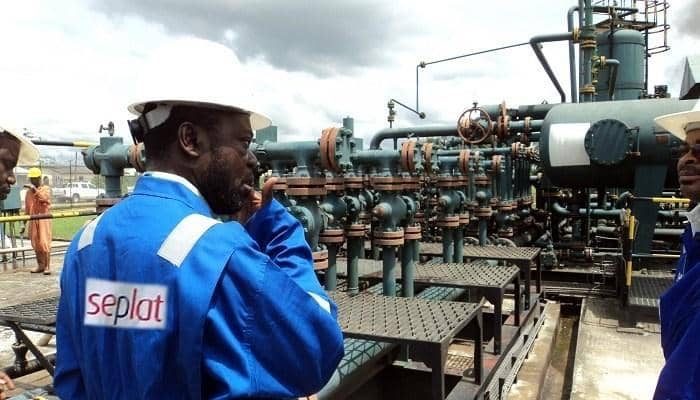
…as Seplat sets to revive 400 wells abandoned by Exxon Mobil
Seplat Energy Plc has revealed plans to revive hundreds of idle oil wells after completing its purchase of Exxon Mobil Corp’s onshore oil and gas assets in the oil-rich Niger Delta region.
The oil company, Business Hallmark learnt, is revitalizing the idle wells and bringing them back into production.
According to sources in the oil and gas industry , only 200 of the 600 oil wells left behind by Mobil are currently active.
“Our immediate focus is rig intervention, short-term oil-generation activities, rejuvenating idle wells, and bringing them back to production.
“Only 200 of about 600 oil blocks are producing”, Chief Operating Officer Samson Ezugworie said at the weekend.
Seplat had on December 13, 2024, announced the finalisation of the $1.28billion acquisition of Mobil Producing Nigeria Unlimited from ExxonMobil.
This was after the Nigerian Upstream Petroleum Regulatory Commission (NUPRC) approved Exxon’s sale of the assets to the independent energy supplier in October.
The deal took advantage of foreign companies exiting Africa’s largest oil producer.
The oil firm had paid $800million of the purchase price last week, following an initial $128million paid when the deal was signed in 2022.
It also deferred the transfer of a further $257.5million to December 2025 due to certain decommissioning, abandonment, and joint venture costs, the company noted.
“It’s just a little over half of the EBITDA for the full year, so it pays back itself very quickly”, said Chief Financial Officer Eleanor Adaralegbe, referring to earnings before interest, taxes, depreciation, and amortization, which rose 25 per cent to $383million for the nine months through September from a year earlier.
Seplat, which is listed in Lagos and London, views the acquisition as a good deal in terms of costs and returns.
The company also sees the deal doubling its production and said it boosts combined assets to 11 blocks in onshore and shallow water Nigeria, 48 producing oil and gas fields, five gas-processing facilities, and three export terminals.
Seplat’s goal is to lift output to more than 200,000 barrels a day, from about 71,000 barrels of oil equivalent daily now, Chief Executive Officer Roger Brown stated, without adding how quickly this would happen.
“In the portfolio, we have significant gas opportunities. There is a huge opportunity in LNG and the domestic gas space”, Brown noted.