
Mary Onyia
Nigerians have strongly condemned the federal government over its recent decision to reintroduce toll collection on some selected dual carriageways across the country, twenty years after the Olusegun Obasanjo’s administration dismantled all toll plaza’s on all federal roads.
The Federal Executive Council had on Wednesday, after rising from its meeting presided over by Vice president Yemi Osinbajo at the presidential villa Abuja, approved the reintroduction of toll at some specific roads in the country, while exempting diplomatic, para-military vehicles, tricycles, motorcycles from the scheme.
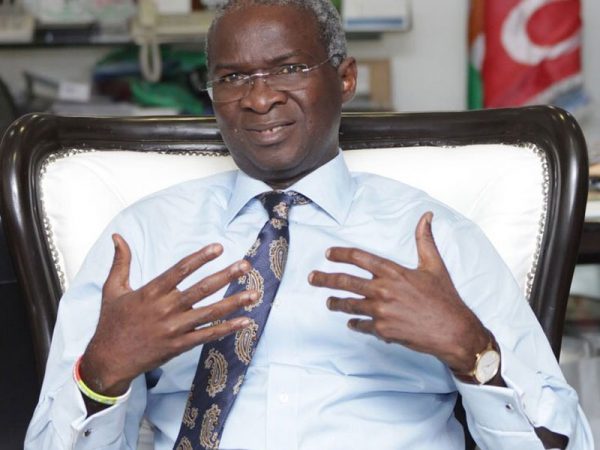
The Minister of Works and Housing, Babatunde Fashola, briefing newsmen after the meeting admitted to presenting a memo to that effect to FEC to introduce tolls on all federal roads across the country spanning 35,000Km, explaining that vehicles would be paying between N200 and N500 toll per trip.
This decision by the federal government has come under serious attack by some Nigerians who claimed that the government was apparently broke and was looking for ways of taxing an already overtaxed citizens.
Mr Ernest Madu, a businessman accused the federal government of not giving account of how previous tolls have been used . He said government has never been known to be transparent and accountable in matters of money. “Most of the roads in question are in various stages of disrepair,” he said, adding “how do you now get people to pay for using such roads?”
A housewife, Mrs Amin Ahmed said he hoped that the federal government in implementing this new directive would adhere to the best approved standard by ensuring that they provide alternative routes for vehicles that may not want to pay any toll, as the sum of N500 may just be too exorbitant for some.
But the minister revealed that the FEC approving the reintroduction of toll plazas on selected roads, it was now left to them to start working on modalities to determine how soon the tolling system would take off.
Fashola stressed that the open tolling system to be introduced would not commence until the affected roads were motorable while operational agreements would have to be negotiated with relevant government agencies.
He said, “We have seen that most of those dual carriageways also have alternative roads, but they are single carriageways; that’s why we left them. So, the only exception to single carriageway are some bridges and they are listed in the regulation.”
He said, “The Ministry of Works and Housing presented a policy memorandum for the approval of federal roads, bridges, tolling policy, and also a regulation that will provide a legal framework for the tolling policy.
“So, we have taken another step. So let me be clear, tolls are not going to start tomorrow. So let us be clear about that.”
The Minister also said the toll collected would not only be used to maintain the roads but would also be used to construct new ones while the toll system would be electronically driven for transparency.