
By Our Sports Correspondent
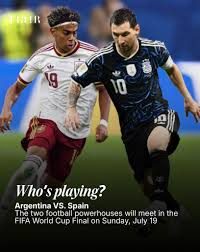
Spain crowned a remarkable campaign by defeating Argentina 1-0 after extra time on Sunday to win their second FIFA World Cup title, ending Lionel Messi’s quest to retain the trophy and signalling the arrival of a new force in world football.
Ferran Torres scored the decisive goal at MetLife Stadium after Argentina had been reduced to 10 men following Enzo Fernández’s late red card. The victory underlined Spain’s emergence as the world’s dominant team, adding the World Cup to their European Championship crown and rewarding a tournament built on discipline, possession, and defensive excellence.
For Spain, the triumph is more than another trophy—it is confirmation that patience, teamwork, and tactical discipline can still overcome individual brilliance. Luis de la Fuente’s team conceded only one goal throughout the tournament, dominated games with confidence, and stayed composed under pressure. Their success provides a blueprint for modern football, where team effort often outweighs dependence on just one superstar.
For Argentina, the loss is painful but does little to diminish the legacy of a team that fought its way to a second consecutive World Cup final. Lionel Messi once again inspired his country at critical moments, but at 39, even his extraordinary talent couldn’t overcome Spain’s relentless organization, youthful energy, and the numerical disadvantage after Fernandez’s red card. The match served as a reminder that football’s greatest players still need a complete team around them to win the biggest prizes.
Football analysts believe the result also reflects a broader shift in world football. They believe that while Argentina’s resilience and fighting spirit carried them deep into the tournament, Spain consistently appeared the more balanced side, combining defensive solidity with technical skill and squad depth. Their victory suggests that sustained success is increasingly built on strong systems, tactical flexibility, and collective responsibility rather than relying solely on individual heroics.
According to a Messi fan, ” the tournament will be remembered for thrilling comebacks, emerging stars, and another unforgettable chapter in Messi’s illustrious career”.
Spain, to many fans who watched the match, leaves as a deserving world champion, while Argentina departs with pride after another outstanding run.
Attention now shifts to the upcoming FIFA World Cup in 2030, co-hosted by Spain, Portugal, and Morocco, with the opening matches taking place in Uruguay, Argentina, and Paraguay to celebrate the centennial of the first World Cup in 1930.