
By Mary Onyia
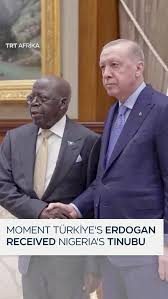
President Bola Ahmed Tinubu’s state visit to the Republic of Türkiye underscores a renewed Nigerian push to secure strategic support in bolstering its defence apparatus and combating terrorism, a central concern for his administration as insecurity deepens at home. During the official visit to Ankara this week, Turkish President Recep Tayyip Erdoğan reiterated Ankara’s readiness to stand with Nigeria in the fight against terrorism, offering deeper cooperation in military training, intelligence sharing, and defence industry engagements.
The Special Adviser to President Tinubu on Media and Policy Communication, Daniel Bwala, said that President Bola Ahmed Tinubu’s ongoing state visit to Türkiye is a strategic move aimed at bringing real benefits to Nigeria. He explained that the partnership is especially important owing to Türkiye’s strength in security and defence manufacturing, adding that both countries have continued to benefit from long-standing investments and cooperation over the years.
The discussions are part of a broader agenda between the two nations to expand collaboration beyond trade and investment into substantive security partnerships, including formal agreements on defence cooperation and joint initiatives to counter violent extremist threats in the Sahel and northern Nigeria.
Tinubu’s outreach to Türkiye comes amid growing public discourse in parts of northern Nigeria that sceptically view military cooperation with Western powers. Islamic cleric Sheikh Abubakar Gumi, for instance, had recently called on the Federal Government to halt military cooperation with the United States and instead seek assistance from so-called neutral partners. One of them is Turkey, a sentiment that resonates in some northern political circles.
The presidency has portrayed the Ankara trip as strategically vital, emphasising that Nigeria and Türkiye share mutual interests in security, defense, economic growth, and infrastructure development. High-level talks on these issues have involved Nigeria’s top defence and security officials, reflecting the priority accorded to counterterrorism cooperation in bilateral discussions.
Despite the security focus, the visit has been overshadowed by renewed public anxiety over President Tinubu’s health, following a brief stumble during the ceremonial welcome by Turkish authorities. The incident was widely circulated on social media, prompting aides to downplay the episode as a minor misstep with no medical consequence, while critics questioned the administration’s transparency on his well-being.
State House officials described the stumble as accidental, attributing it to a poorly laid carpet, and emphasised that President Tinubu continued his scheduled engagements without interruption.
Providing clarification via his verified X handle, the Senior Special Assistant to the President on Social Media, Dada Olusegun, said the President continued his engagements as scheduled.
“Mr President missed his step very briefly and has continued his bilateral meetings with President Recep Tayyip Erdoğan.
Analysts note that security cooperation with Türkiye could serve both strategic and political purposes: it not only addresses Nigeria’s acute need for counterterrorism capacity but may also appeal to voices in the north wary of Western military involvement, potentially easing regional political tensions. While it is difficult to assess its direct impact on public opinion, the shift signals Nigeria’s effort to diversify defence partnerships.
In Ankara, President Erdoğan highlighted ongoing talks on military and intelligence collaboration, framing them as part of a shared commitment to regional stability and mutual interests between the two nations.
This Ankara trip is part of an active foreign engagements calendar for President Tinubu. Since assuming office in May 2023, he has undertaken more than 10 foreign trips aimed at strengthening diplomatic and economic ties with key global partners, including this third visit to Türkiye in recent years.
The bilateral engagements in Turkey are expected to yield tangible cooperation outcomes, particularly in defence, trade, and infrastructure, as Nigeria seeks both practical security support and diplomatic diversification beyond conventional Western alliances.