
Mary Onyia
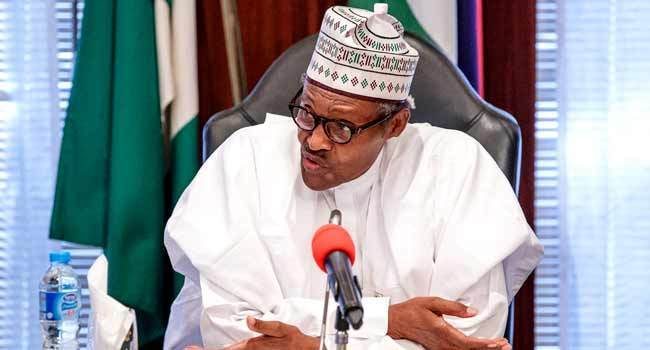
Following the renewed spate of attacks in different parts of the country by bandits and the avalanche of criticisms leveled at the Buhari’s government by members of the public over their perceived inability to tackle the problem once and for all, the Presidency, in response to the cries of the people, has come up with a fresh idea on how to deal with the problem of insecurity in the land.
In a statement issued by the Senior Special Assistant to President Buhari on Media and Publicity, Garba Shehu, the government said the Federal Executive Council (FEC) has approved the purchase of new military vehicles.
“Only this morning (Wednesday), the government at a meeting of the cabinet approved the procurement of the largest ever single procurement of military vehicles.
“Nigerians are assured that the government will keep its promise to the nation and threats to security will be handled with the firmness they call for. And government will remain firm in securing the country’s unity and progress,” Shehu said.
Critics, however, say the government’s responses have been mostly belated and largely ineffectual.
Over the past few months president Buhari and his government has come under serious condemnation for their seeming poor handling of incessant killings in many states.
Everyday, the newspapers and social media are replete with gory stories of terrorists attack in various parts of the country and especially in the northern states leaving in their trail hundreds of dead bodies killed during the attacks, with many more kidnapped and held for ransom.
The herdsmen, terrorists, bandits, insurgents, local militias and unknown gunmen have at various times been blamed for these attacks, yet no arrest has been made.
Meanwhile, the U.S. State Department has cleared the sale of 12 AH-1Z Cobra attack helicopters to Nigeria worth nearly $1 billion, apparently after U.S. lawmakers lifted objections over human rights concerns.
The Defense Security Cooperation Agency on yesterday announced the sale of the helicopters and related defense systems to the Nigerian military. The package includes $25 million for human rights-related training.
The sale includes the Bell-made Cobras; 28 General Electric-made T700-401C engines; 2,000 Advanced Precision Kill Weapon Systems used to convert unguided missies into precision-guided missiles; and night vision, targeting and navigation systems.
The case highlights the Biden administration’s attempts to balance human rights concerns in the arms sale process.
Foreign Policy reported in July that the top Democrat and Republican on the Senate Foreign Relations Committee delayed the sale amid concerns Nigerian President Muhammadu Buhari was drifting toward authoritarianism. The country is facing multiple security challenges, including terrorism.
“Nigeria requires a fundamental rethink of the framework of our overall engagement,” committee Chairman Bob Menendez, D-N.J., told Secretary of State Antony Blinken during the diplomat’s testimony before the panel last year.
Menendez also tweeted that “the Nigerian government must get serious about security” after the militant group Boko Haram kidnapped more than 300 schoolboys in December 2020. The Nigerian government also ran afoul of the New Jersey Democrat in 2019 after arresting one of his constituents, Nigerian-American journalist Omoyele Sowore.
According to the announcement, $25 million in the package will be dedicated to “institutional and technical assistance” to Nigeria’s military to continue its Air-to-Ground Integration program, which concerns targeting processes that are consistent with international humanitarian law and the laws of armed conflict.
“The proposed sale will better equip Nigeria to contribute to shared security objectives, promote regional stability and build interoperability with the U.S. and other Western partners,” the announcement read. “This sale will be a major contribution to U.S. and Nigerian security goals.”